Medically reviewed by Dr. Muhammad Raza, Consultant Gastroenterologist & Hepatologist, Lahore.
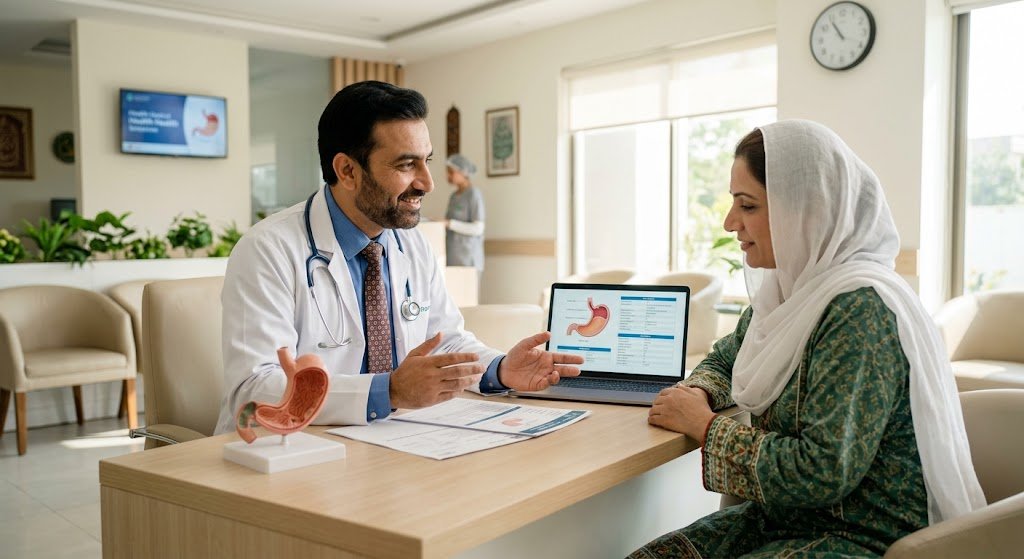
Acidity (GERD): Causes, Symptoms & Treatment in Pakistan
If you often feel a burning sensation in your chest after meals, you are not alone. Acidity — medically known as gastroesophageal reflux disease, or GERD — is one of the most common digestive complaints in Pakistan. The good news is that with the right acidity treatment in Pakistan, most people can control their symptoms and protect their food pipe from long-term damage.
What Exactly Is Acidity (GERD)?
Acidity happens when stomach acid flows back up into the food pipe (oesophagus). A small muscular valve called the lower oesophageal sphincter normally keeps acid in the stomach. When this valve weakens or relaxes at the wrong time, acid escapes upward, causing the familiar burning feeling behind the breastbone that most of us call “acidity” or “tezabiyat.”
Occasional acidity after a heavy meal is normal and happens to almost everyone. It becomes a medical condition — GERD — when the burning happens frequently, at least twice a week, or when it starts affecting your sleep, eating habits, or daily life. Left untreated over many years, repeated acid exposure can inflame or damage the lining of the food pipe, so it is worth taking seriously rather than simply reaching for home remedies every evening.
Why Acidity Is So Common in Pakistan
Our food and lifestyle play a major role. The typical Pakistani diet is rich in spices, fried foods, and strong chai — all of which can relax the valve between the stomach and the food pipe or directly irritate its lining. Add long gaps between meals during a busy workday, late-night dinners, and the stress of city life in places like Lahore, and you have the perfect recipe for chronic acidity.
Certain habits are particularly common triggers here. Many people drink strong doodh patti or green tea several times a day, eat large portions of oily salan with roti late at night, and then lie down soon after. Smoking, which remains common, also weakens the oesophageal valve. During Ramadan, sudden heavy meals at iftar after a full day of fasting can cause severe reflux in people who otherwise manage fine.
If you are unsure whether your symptoms are simple acidity or something more serious, an upper endoscopy can give a clear picture of what is happening inside your food pipe and stomach.
Common Causes and Triggers of Acidity
Acidity rarely has a single cause. In most patients I see, it is a combination of diet, habits, and sometimes an underlying condition. The most common contributors include:
- Spicy and fried foods: Pakoras, samosas, spicy karahi, and achar can trigger reflux, especially when eaten in large quantities or late at night.
- Caffeine and strong tea: Multiple cups of strong chai or coffee relax the oesophageal valve and increase acid production.
- Carbonated drinks: Fizzy drinks increase pressure in the stomach, pushing acid upward.
- Overeating and late meals: A full stomach puts pressure on the valve. Eating within two to three hours of bedtime is a classic trigger.
- Smoking and paan/gutka: Tobacco weakens the valve and increases acid secretion.
- Obesity: Extra weight around the abdomen increases pressure on the stomach.
- Pregnancy: Hormonal changes and the growing uterus commonly cause temporary reflux.
- Certain medicines: Some painkillers and blood pressure medicines can worsen acidity — never stop a prescribed medicine without talking to your doctor first.
- H. pylori infection and ulcers: Sometimes what feels like simple acidity is actually caused by a stomach infection or ulcer that needs specific treatment.
Symptoms of Acidity You Should Not Ignore
The classic symptom is heartburn — a burning pain in the centre of the chest that usually starts after eating and may spread to the throat. Many patients also describe a sour or bitter taste in the mouth, known as acid regurgitation. But acidity can show up in less obvious ways too:
- Chronic dry cough or throat clearing, especially at night
- Hoarseness or a sore throat that does not improve
- Feeling of a lump in the throat
- Difficulty swallowing or food feeling “stuck”
- Chest discomfort that mimics heart pain
- Bloating, burping, and nausea after meals
- Bad breath despite good oral hygiene
Because reflux can irritate the throat and airways, some patients are treated for months for a “chest allergy” or asthma before anyone realises the real culprit is acidity. If your cough or throat symptoms are worse after meals or when lying down, acidity deserves consideration.
When Should You See a Doctor for Acidity?
Most occasional acidity can be managed with lifestyle changes. But you should see a gastroenterologist if you notice any of these warning signs:
- Symptoms more than twice a week despite diet changes
- Difficulty or pain while swallowing
- Vomiting blood or material that looks like coffee grounds
- Black, tarry stools
- Unexplained weight loss or loss of appetite
- Persistent vomiting
- Chest pain — always rule out heart problems first in an emergency
- Acidity that does not improve with standard medicines
These red flags can indicate complications such as inflammation of the food pipe, ulcers, narrowing, or — rarely — more serious conditions. An endoscopy is a quick, safe procedure that lets the doctor look directly at your food pipe and stomach and take small samples if needed. Many patients worry about it, but it usually takes only a few minutes and is done with sedation so you remain comfortable.
Acidity Treatment in Pakistan: What Actually Works
Effective acidity treatment in Pakistan follows the same evidence-based approach used worldwide, adapted to our local diet and lifestyle. Treatment usually has three layers.
1. Lifestyle and diet changes
This is the foundation, and for mild cases it may be all you need. Eat smaller, more frequent meals instead of two heavy ones. Avoid lying down for at least two to three hours after eating. Raise the head of your bed by six to eight inches. Maintain a healthy weight, quit smoking, and identify your personal trigger foods by keeping a simple food diary for two weeks.
2. Acid-reducing medicines
When lifestyle changes are not enough, doctors commonly prescribe acid-reducing medicines. These include antacids for quick relief, H2 blockers, and proton pump inhibitors (PPIs), which reduce acid production more strongly and allow an inflamed food pipe to heal. These are prescription medicines — the right choice and duration depend on your symptoms and endoscopy findings, so they should be started on a doctor’s advice rather than self-medicated for months.
3. Treating the underlying cause
If tests show H. pylori infection, a course of specific medicines can eradicate it. If there is a hiatal hernia or severe valve weakness causing persistent reflux, surgical options exist, though they are needed only in a small minority of cases. The key point is that treatment works best when it targets the actual cause, which is why a proper evaluation matters more than years of self-medication.
Consultation at our clinic costs approximately Rs. 2,000 (both in-clinic and online), though please confirm current fees with the clinic when booking.
Diet and Lifestyle Tips for Pakistani Homes
You do not need to give up Pakistani food entirely — small adjustments make a big difference:
- Choose boiled, steamed, or lightly sautéed dishes over deep-fried ones. A home-style dal with one roti is far gentler than a heavy karahi with naan.
- Reduce — not necessarily eliminate — red chilli, garam masala, and achar. Many patients do fine with mild spices.
- Switch strong doodh patti to weaker chai or warm water, and limit it to one or two cups a day.
- Eat dahi (yogurt) with meals; it is soothing for many acidity sufferers.
- Avoid very hot, very cold, and very sour foods (like imli and excessive lemon) during flare-ups.
- Walk for 15–20 minutes after dinner instead of lying down.
- During Ramadan, break your fast with dates and water, eat iftar in stages rather than all at once, and keep sehri light.
Frequently Asked Questions
Is acidity the same as GERD?
Not exactly. “Acidity” is the everyday term for the burning sensation caused by stomach acid. GERD (gastroesophageal reflux disease) is the medical diagnosis when this reflux happens frequently and causes troublesome symptoms or damage to the food pipe. Occasional acidity after a heavy meal is normal; GERD is a chronic condition that needs proper treatment.
Can acidity be cured permanently?
For many people, yes — especially when the cause is lifestyle-related or an H. pylori infection that can be eradicated. Others need long-term management with diet and occasional medicines. The right approach depends on the underlying cause, which is why an evaluation by a gastroenterologist is worthwhile if your symptoms keep returning.
Does stress cause acidity?
Stress does not directly create acid, but it can worsen symptoms. Stress changes eating patterns, increases sensitivity to pain, and can make the stomach more reactive. Many patients notice their acidity flares during exams, work pressure, or family worries. Managing stress through regular sleep, walking, and relaxation can genuinely help your stomach too.
When is an endoscopy needed for acidity?
An endoscopy is recommended if you have warning signs (difficulty swallowing, weight loss, vomiting blood, black stools), if symptoms persist despite treatment, if you need long-term acid-reducing medicines, or if you are over 40 with new symptoms. It is the most reliable way to check for inflammation, ulcers, or other causes. You can read more about the procedure on our endoscopy page or FAQs.
Living Well with Acidity
Acidity is extremely common in Pakistan, but it does not have to control your life. Most cases respond well to a combination of sensible diet changes and modern medicines, and the small number of cases with complications can be caught early with timely evaluation. The mistake to avoid is years of silent suffering or endless self-medication without ever finding out the cause. If your symptoms are frequent, getting worse, or showing any warning signs, the right acidity treatment in Pakistan starts with a proper diagnosis — and that is a simple step to take.
Book an appointment with Dr. Muhammad Raza on WhatsApp to discuss your acidity symptoms and get a treatment plan tailored to you. You can also learn more about Dr. Raza or contact the clinic directly.
This article is for information only and is not a substitute for professional medical advice. Please consult a qualified doctor for diagnosis and treatment.