Medically reviewed by Dr. Muhammad Raza, Consultant Gastroenterologist & Hepatologist, Lahore.
A gnawing pain in the upper abdomen that wakes you at night, eases with food, then returns — this is the classic signature of a stomach ulcer. Ulcers are common in Pakistan, often caused by a treatable stomach infection or by frequent painkiller use, and modern stomach ulcer treatment heals the large majority of cases completely. Here is what you need to know about symptoms, causes, and the diet that helps healing.
What Is a Stomach Ulcer?
A stomach ulcer (peptic ulcer) is an open sore in the lining of the stomach — or in the duodenum, the first part of the small intestine just beyond the stomach (a duodenal ulcer). The stomach protects itself from its own acid with a mucus barrier; when that barrier breaks down, acid digests the lining itself, creating a sore. Most ulcers are small but painful, and while many heal with treatment, untreated ulcers can bleed or, rarely, perforate — which is why diagnosis matters.
Symptoms of a Stomach Ulcer
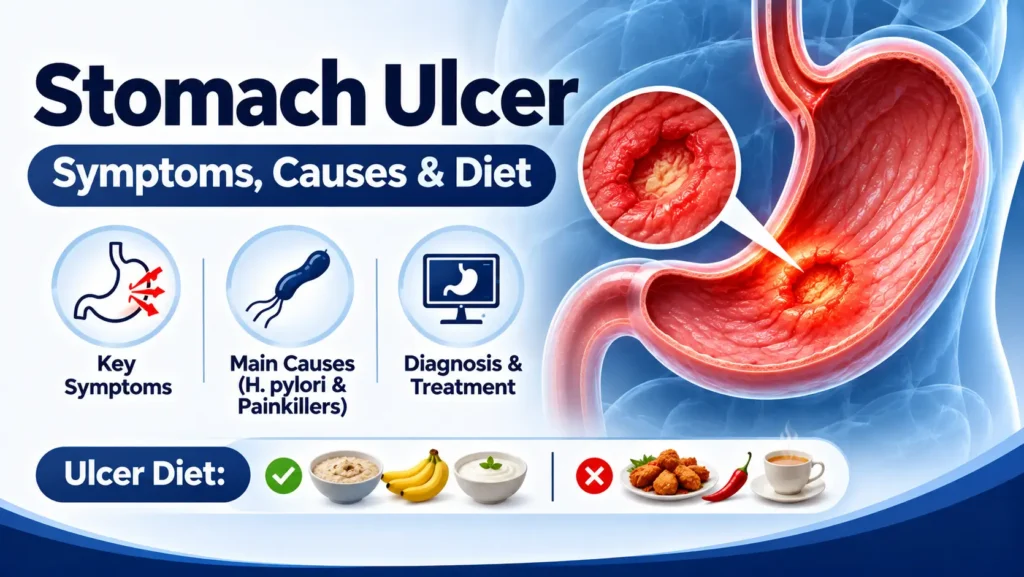
The hallmark symptom is upper abdominal pain with a characteristic pattern:
- Burning or gnawing pain between the breastbone and navel
- Pain that worsens on an empty stomach and often improves temporarily with food or antacids (typical of duodenal ulcers)
- Pain that worsens with food (more typical of stomach ulcers)
- Night-time pain that wakes you from sleep — a particularly suggestive sign
- Bloating, burping, and feeling full quickly
- Nausea; sometimes vomiting
- Heartburn-like burning
Warning signs that need prompt medical attention: vomiting blood or coffee-ground-like material, black tarry stools, sudden severe abdominal pain, unexplained weight loss, or persistent vomiting. These can indicate bleeding or perforation — do not wait.
The Two Main Causes: H. pylori and Painkillers
Contrary to old beliefs, spicy food and stress do not directly cause ulcers (though they can aggravate symptoms). The two real culprits are:
1. H. pylori infection
Helicobacter pylori is a bacterium that colonises the stomach lining, weakening its defences. It is very common in Pakistan, spreading through contaminated food and water, and it is the leading cause of ulcers here. Many infected people have no symptoms at all — but in others, it causes chronic gastritis and ulcers. The good news: a simple test (breath, stool, or biopsy) detects it, and a course of prescribed medicines eradicates it in most cases, allowing the ulcer to heal and greatly reducing recurrence.
2. NSAID painkillers
Common painkillers (non-steroidal anti-inflammatory drugs) — used for joint pain, backache, headaches, and arthritis — damage the stomach’s protective barrier, especially with regular use. In Pakistan, where these tablets are often bought without prescription and taken for months, NSAID-related ulcers and bleeding are a frequent emergency. If you need regular painkillers, discuss stomach protection with your doctor — never just layer antacids on top indefinitely.
Other contributors include smoking (slows healing), excessive alcohol, and, rarely, conditions causing excess acid production.
How Ulcers Are Diagnosed
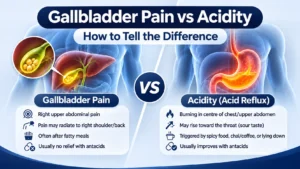
Symptoms alone cannot confirm an ulcer — gastritis, gallbladder problems, and even heart issues can mimic it. Diagnosis typically involves:
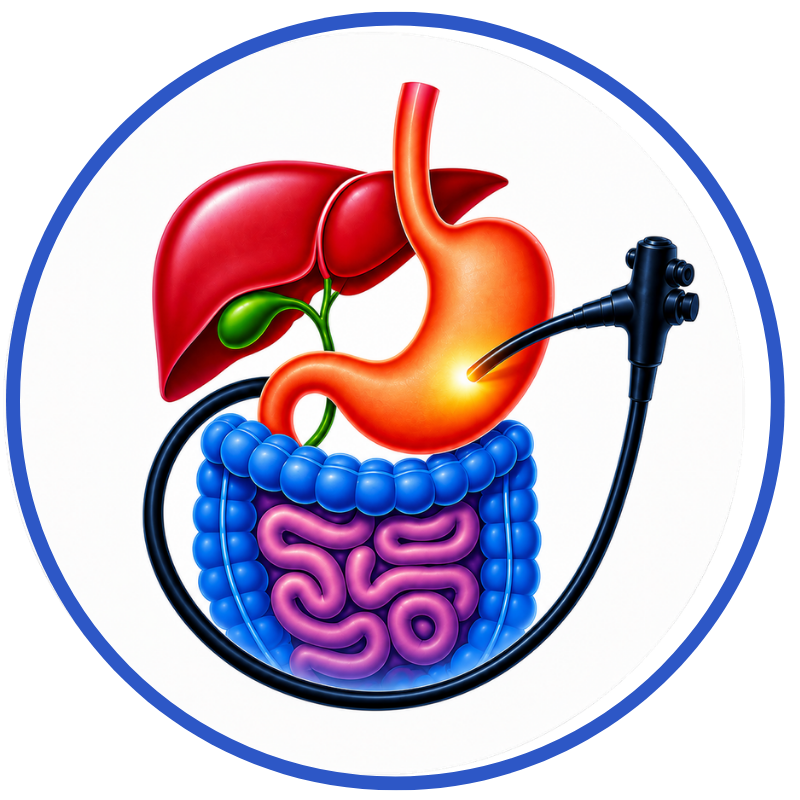
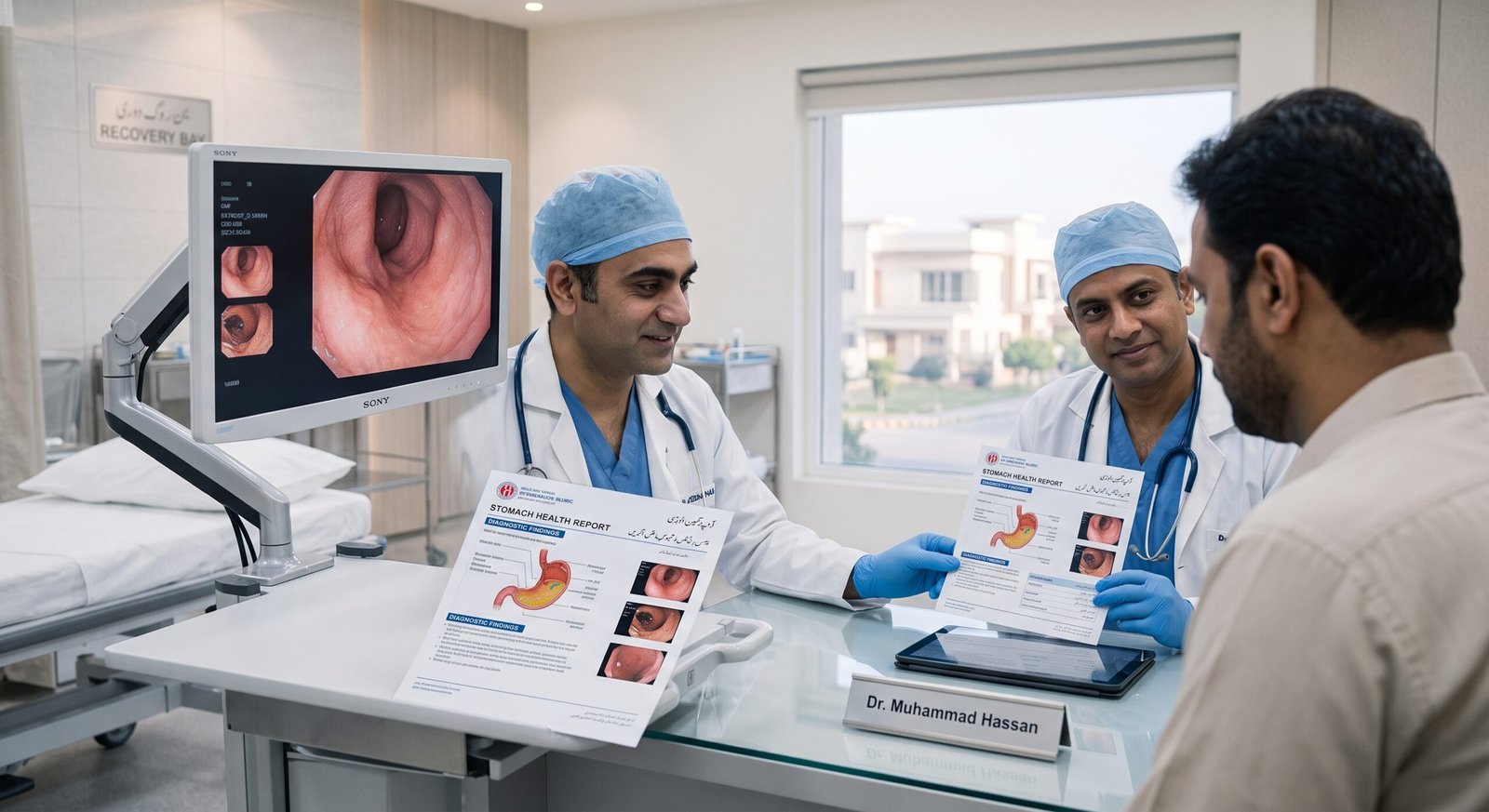
- Upper endoscopy: the gold standard — a thin camera examines the food pipe, stomach, and duodenum directly, confirms the ulcer, and takes small biopsies to test for H. pylori and rule out anything concerning. Quick, done under sedation. See our endoscopy page for details.
- H. pylori testing: breath test, stool test, or biopsy during endoscopy.
- Medication review: identifying painkillers or other drugs contributing to the problem.
Stomach Ulcer Treatment: What to Expect
Modern stomach ulcer treatment is highly effective — most uncomplicated ulcers heal within weeks:
1. Acid-reducing medicines
Medicines that strongly reduce stomach acid (proton pump inhibitors are the usual choice) allow the ulcer to heal by removing the acid assault. Treatment typically runs for several weeks, as prescribed — stopping early because you “feel better” risks incomplete healing.
2. H. pylori eradication
If infection is found, a combination course of medicines clears it. A follow-up test confirms eradication — this step is what prevents the ulcer from coming back.
3. Addressing painkillers
If NSAIDs caused the ulcer, your doctor will reassess whether they are still needed, switch to safer alternatives where possible, or add stomach-protective medicines if they must continue.
4. Follow-up
Stomach (gastric) ulcers usually need a repeat endoscopy to confirm complete healing; duodenal ulcers often do not, unless symptoms persist. Your doctor will advise based on your case.
Surgery for ulcers is now rare, reserved for complications like perforation or uncontrollable bleeding. The vast majority of patients never need it.
Consultation at our clinic costs approximately Rs. 2,000 (in-clinic or online) — please confirm current fees when booking.
Ulcer Diet: What to Eat While Healing
No specific food cures an ulcer — medicines do that — but the right diet reduces irritation and supports healing:
Helpful foods
- Soft, easy-to-digest staples: khichdi, soft roti, plain rice, oats/dalia
- Dahi (yogurt) and milk in moderate amounts — soothing for many patients
- Well-cooked vegetables: loki, tinda, carrots, palak
- Fruits: bananas, papaya, peeled apples
- Lean proteins: eggs, soft-cooked chicken, dal
- Plenty of water; weak chai or kehwa instead of strong doodh patti
Foods and habits to avoid during healing
- Very spicy foods, heavy masalas, and achar
- Deep-fried foods and very oily salan
- Strong tea, coffee, and fizzy drinks
- Smoking and alcohol — both delay healing significantly
- Skipping meals — long empty-stomach periods let acid act unopposed; eat small, regular meals
- Self-medicating with painkillers for the ulcer pain itself
Once healed and H. pylori cleared, most patients return to a normal diet — the restrictions are for the healing period, not forever.
Preventing Ulcers from Coming Back
- Complete the full H. pylori eradication course and confirm clearance with a follow-up test.
- Avoid unnecessary painkillers; when needed, use the lowest effective dose for the shortest time, with stomach protection as your doctor advises.
- Quit smoking — it doubles healing time and recurrence risk.
- Manage stress and eat regular meals — supportive, even if not direct causes.
- Seek care early if characteristic pain returns rather than self-treating for months.
Frequently Asked Questions
Can a stomach ulcer heal on its own?
Small ulcers sometimes improve temporarily, but without treating the cause — usually H. pylori or painkillers — they typically recur and can develop complications like bleeding. Proper treatment heals the ulcer and addresses the cause, which is far safer than waiting.
Is H. pylori contagious?
It spreads through contaminated food and water and possibly close contact, and it is very common in Pakistan — many carriers never develop ulcers. Family members of ulcer patients are sometimes tested, especially if they have symptoms. Good food and water hygiene reduces transmission.
Can I drink milk to soothe ulcer pain?
Milk may soothe pain briefly, but it then stimulates more acid production — so it is not the remedy it was once thought to be. Moderate dahi is generally fine and soothing. Real healing comes from acid-reducing medicines and treating the cause, not from milk.
When is an endoscopy necessary for suspected ulcer?
Endoscopy is recommended for most suspected ulcers — it confirms the diagnosis, checks for H. pylori, rules out complications, and excludes anything concerning. It is especially important with warning signs, in patients over 40–50 with new symptoms, and for stomach ulcers, which need healing confirmation. Our FAQs answer common procedure questions.
Do Not Let an Ulcer Run Its Course
Stomach ulcers hurt, disrupt sleep and eating, and can turn dangerous if ignored — yet they are among the most treatable conditions in gastroenterology. A test for H. pylori, a review of your painkiller use, a few weeks of proper medicines, and a sensible healing diet resolve the large majority of cases. If the gnawing pain pattern described here sounds familiar, effective stomach ulcer treatment starts with a proper diagnosis.
Book an appointment with Dr. Muhammad Raza on WhatsApp to get evaluated. You can also learn more about Dr. Raza or contact the clinic.
This article is for information only and is not a substitute for professional medical advice. Please consult a qualified doctor for diagnosis and treatment.