Medically reviewed by Dr. Muhammad Raza, Consultant Gastroenterologist & Hepatologist, Lahore.
Gallstones are incredibly common in Pakistan, especially among women over 40 — yet many people live with them for years without knowing. The real question most patients ask me is not just about gallstones treatment, but this: do I actually need my gallbladder removed? This guide walks you through the symptoms, the tests, and how doctors decide between watchful waiting and surgery.
What Are Gallstones?
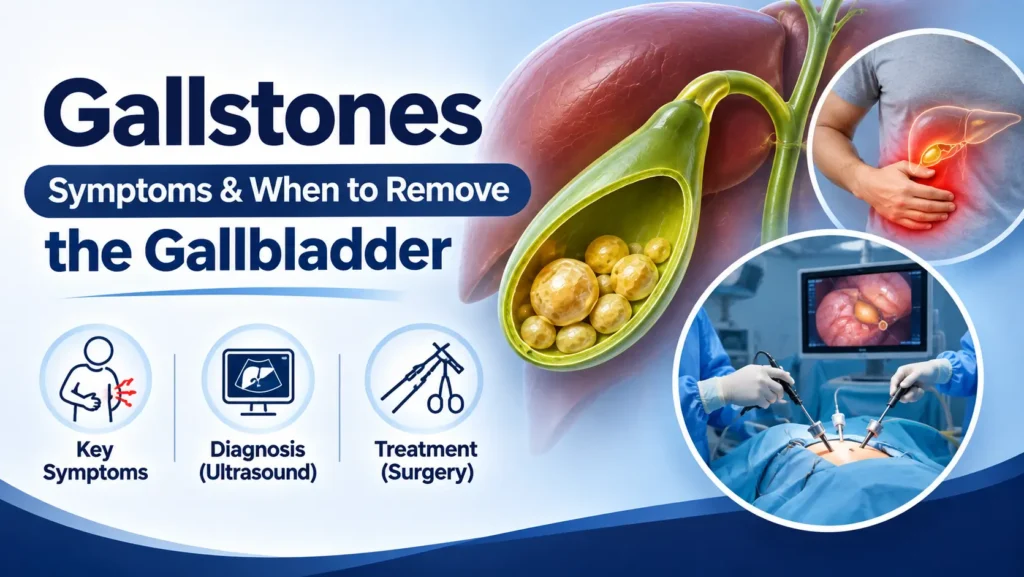
The gallbladder is a small, pear-shaped organ tucked under your liver. Its job is to store bile — a digestive fluid the liver makes to help break down fats. Gallstones form when bile hardens into pebble-like lumps, usually made of cholesterol or bilirubin. They can be as small as a grain of rice or as large as a golf ball, and you can have one or dozens.
Certain people are more prone to them: women (especially after multiple pregnancies), people over 40, those who are overweight, people who lose weight very rapidly (crash diets and unplanned weight-loss regimes), and those with diabetes. In my Lahore practice, I also see gallstones frequently in patients whose diets are heavy in fried foods — samosas, pakoras, and parathas cooked in ghee or reused oil.
Symptoms of Gallstones
Here is something surprising: most gallstones cause no symptoms at all. So-called “silent” gallstones are often discovered by accident on an ultrasound done for another reason, and they usually need no treatment.
When gallstones do cause trouble, the classic symptom is biliary colic — a distinct type of pain:
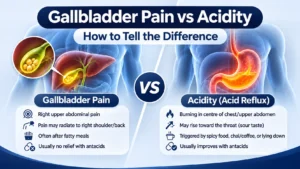
- Location: Upper right side of the abdomen, just below the ribs. The pain can spread to the right shoulder or the back between the shoulder blades.
- Timing: Typically starts 30 minutes to a few hours after a fatty meal — think a heavy desi dinner with fried items.
- Nature: A steady, gripping ache or pressure that builds and lasts from 30 minutes to several hours, then fades.
- Associated symptoms: Nausea, vomiting, and sometimes bloating.
Warning signs of complications
Sometimes a stone blocks the gallbladder outlet or the bile duct, causing serious complications. Seek medical care promptly if you have:
- Severe pain lasting more than 5–6 hours without easing
- Fever with chills alongside abdominal pain (possible gallbladder infection)
- Yellowing of the eyes or skin (jaundice — a stone may be stuck in the bile duct)
- Dark urine and pale, clay-coloured stools
- Persistent vomiting or inability to keep fluids down
How Gallstones Are Diagnosed
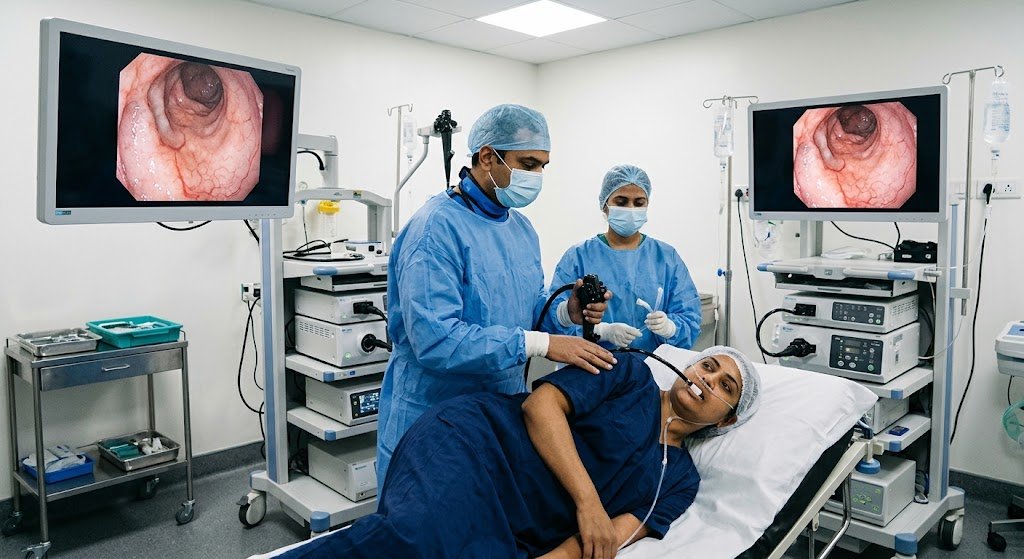
An abdominal ultrasound is the first and best test — it is painless, widely available across Pakistan, and detects gallstones with high accuracy. Blood tests check for infection or bile duct blockage. If a stone is suspected in the bile duct, further tests like MRCP (a special MRI of the bile ducts) or an endoscopic procedure may be advised. An ultrasound in Lahore typically costs in the range of Rs. 2,000–4,000, though prices vary by facility — always confirm with the clinic or lab.
Gallstones Treatment in Pakistan: Your Options
Gallstones treatment depends on whether the stones are causing symptoms — this is the single most important factor.
Watchful waiting (for silent gallstones)
If your gallstones were found incidentally and you have no symptoms, no treatment is needed. Most people with silent gallstones never develop problems. Your doctor may simply advise a sensible diet and periodic follow-up.
Medicines
Certain medicines can slowly dissolve small cholesterol stones, but they work only in carefully selected patients, take many months, and stones often return after stopping. For most symptomatic patients, medicines are not a lasting solution.
Surgery: gallbladder removal (cholecystectomy)
For patients with repeated biliary colic or complications, removing the gallbladder is the definitive gallstones treatment. The standard operation today is laparoscopic cholecystectomy — keyhole surgery through tiny incisions. Most patients go home within 24–48 hours and return to normal activities in one to two weeks. The liver continues to make bile, which simply drips directly into the intestine — most people digest food normally afterwards, though some notice looser stools with very fatty meals initially.
In Pakistan, laparoscopic gallbladder removal is widely performed. Costs vary considerably between public and private hospitals — typically in the range of Rs. 100,000–250,000 in private setups — so confirm the exact figure with your chosen hospital.
When Is Surgery Recommended?
Doctors generally recommend gallbladder removal when:
- You have had two or more episodes of biliary colic — repeat attacks tend to continue.
- There is acute gallbladder inflammation (cholecystitis) with fever and severe pain.
- A stone is blocking the bile duct, causing jaundice or infection.
- Gallstones have caused pancreatitis (inflammation of the pancreas) — a serious complication.
- There are large polyps in the gallbladder alongside stones, or the gallbladder wall is thickened and suspicious.
Surgery is usually not recommended for silent, symptom-free gallstones — with a few exceptions (such as very large stones, a calcified “porcelain” gallbladder, or patients with certain blood disorders), which your doctor will discuss individually.
Diet and Lifestyle With Gallstones
No diet dissolves gallstones, but sensible eating reduces attacks while you and your doctor decide on a plan:
- Cut down on fried foods. Reduce samosas, pakoras, deep-fried parathas, and foods cooked in reused oil or excessive ghee.
- Eat regular meals. Skipping meals lets bile sit and concentrate in the gallbladder. Regular, moderate meals keep bile flowing.
- Lose weight gradually if overweight — but avoid crash diets, which actually increase stone formation.
- Stay hydrated and include fibre: vegetables, dal, fruit, and whole-wheat roti.
- Be cautious with very fatty celebratory meals (wedding dinners, Eid feasts) — these are the classic triggers of a gallstone attack.
Frequently Asked Questions
Can I live normally without a gallbladder?
Yes. The gallbladder stores bile but is not essential for digestion. After removal, bile flows directly from the liver into the intestine. Most people eat normally within weeks. A small number notice mild diarrhoea after very fatty meals, which usually settles; eating smaller, lower-fat meals helps during the adjustment period.
Do gallstones always need surgery?
No. Silent gallstones found by chance usually need no treatment at all. Surgery is advised when stones cause repeated pain attacks or complications like infection, bile duct blockage, or pancreatitis. The decision is individual — discuss your ultrasound findings and symptom history with a gastroenterologist or surgeon.
Can medicines dissolve gallstones permanently?
Dissolving medicines work only for small cholesterol stones in a functioning gallbladder, take many months, and stones commonly return once the medicine stops. They are suitable for a small minority of patients. For most people with symptomatic stones, laparoscopic removal remains the reliable, lasting treatment.
What does gallbladder surgery cost in Pakistan?
Costs vary widely between public hospitals and private setups, and between cities. In private hospitals, laparoscopic cholecystectomy commonly falls in an approximate range of Rs. 100,000–250,000, but always confirm the exact fee, surgeon’s charges, and hospital stay costs with the facility beforehand, as prices change and packages differ.
Having repeated upper-right abdominal pain after meals? Book an appointment with Dr. Muhammad Raza on WhatsApp to discuss whether your gallstones need treatment or simply monitoring. Consultation fee is Rs. 2,000 (in-clinic and online).
This article is for information only and is not a substitute for professional medical advice. Please consult a qualified doctor for diagnosis and treatment.