Medically reviewed by Dr. Muhammad Raza, Consultant Gastroenterologist & Hepatologist, Lahore.
Almost everyone in Pakistan has experienced acidity at some point — that burning in the chest after a spicy meal or too much chai. But when heartburn becomes a daily companion, it stops being a minor annoyance and starts being a medical problem. Recognising chronic acidity symptoms early can protect you from ulcers, damage to your food pipe, and other complications that are far harder to treat later.
When Does Acidity Become “Chronic”?
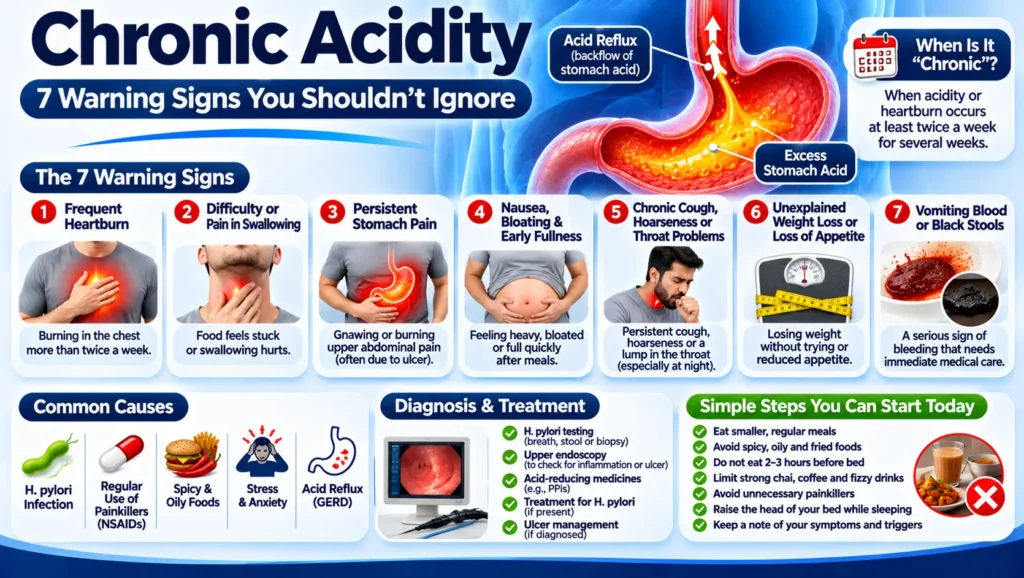
Doctors generally consider acidity chronic when symptoms occur at least twice a week for several weeks, or when you find yourself needing antacids or acid-reducing medicines regularly just to get through the day. At this stage, the acid is repeatedly bathing the lining of your food pipe and stomach, and that lining needs time and treatment to heal.
Many patients in Pakistan live with chronic acidity for years. They adjust — eating less, avoiding favourite foods, sleeping propped up on pillows — without ever asking why it is happening. Sometimes the cause is simple and fixable, such as a stomach infection called H. pylori or regular use of painkillers. Other times it signals an ulcer or inflammation that needs direct treatment. Either way, persistent symptoms deserve an answer, not just another strip of tablets.
Warning Sign 1: Heartburn More Than Twice a Week
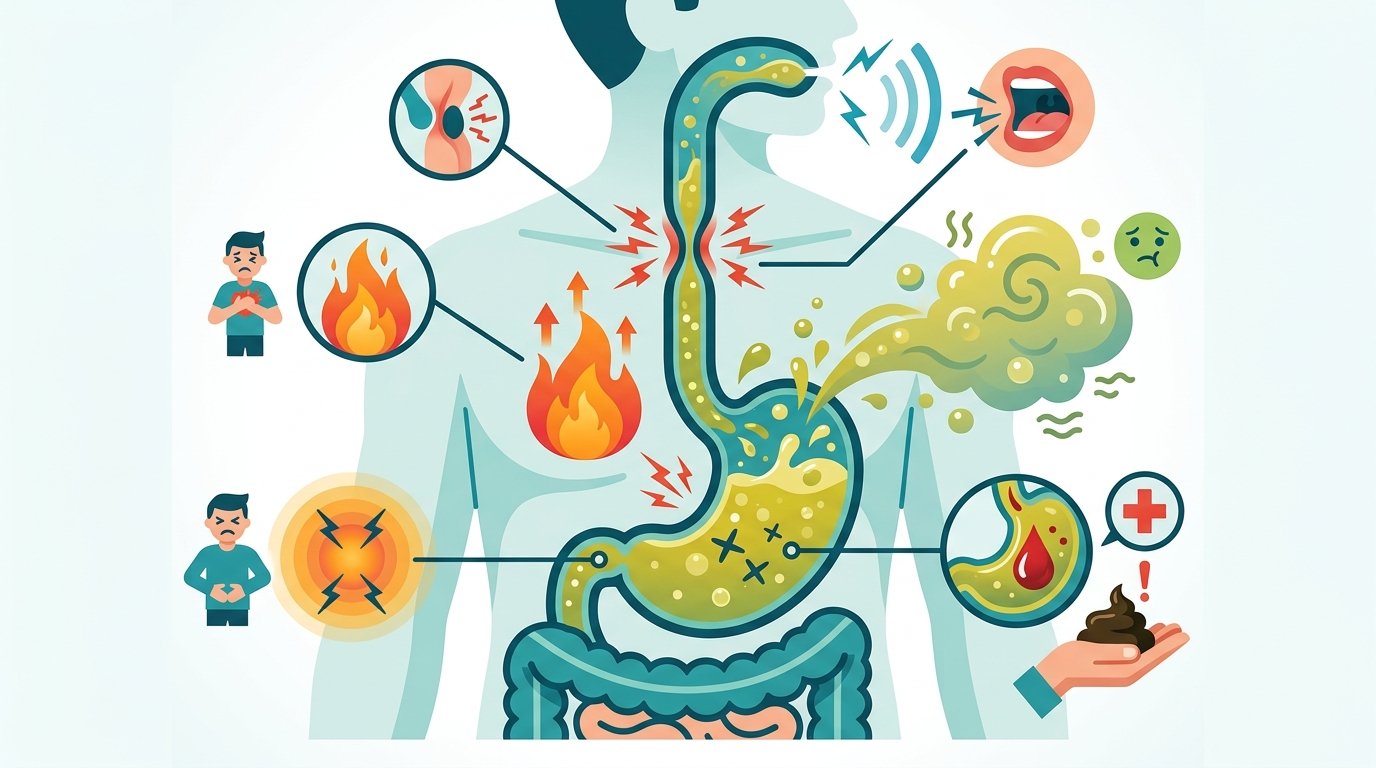
The occasional burn after a heavy dawat is normal. But if you are reaching for relief several times a week, your oesophageal valve is likely not doing its job, or your stomach is producing excess acid. Frequent heartburn is the hallmark of chronic acidity symptoms and the most common reason patients eventually seek help. Do not wait until it becomes daily — earlier evaluation means simpler treatment.
Warning Sign 2: Difficulty or Pain When Swallowing
If food feels stuck in your chest, or swallowing causes pain, the lining of your food pipe may be inflamed or narrowed from long-term acid damage. This is called dysphagia, and it is always worth investigating. While most cases turn out to be inflammation that heals with treatment, persistent swallowing difficulty needs an endoscopy to see exactly what is going on.
Warning Sign 3: Persistent Stomach or Upper Abdominal Pain
A gnawing, burning pain in the upper abdomen — especially if it wakes you at night, improves temporarily with food or antacids, then returns — is the classic pattern of a stomach or duodenal ulcer. In Pakistan, a major cause of such ulcers is H. pylori, a bacterial infection of the stomach that is very common here and spreads through contaminated food and water. The good news: once diagnosed with a simple test, H. pylori can usually be eradicated with a course of medicines, and the ulcer heals.
Long-term use of painkillers (NSAIDs) for joint pain, backache, or headaches is the other major ulcer cause I see regularly. If you take painkillers frequently and have developed stomach pain, tell your doctor — do not simply add more antacids on top.
Warning Sign 4: Nausea, Bloating, and Feeling Full Quickly
Chronic acidity often travels with indigestion: a heavy, bloated feeling after small meals, excessive burping, and nausea. When these symptoms persist for weeks, they may indicate gastritis (inflammation of the stomach lining), delayed stomach emptying, or H. pylori infection. A food diary can help, but if symptoms continue beyond a few weeks despite diet changes, a medical evaluation is the next step.
Warning Sign 5: Chronic Cough, Hoarseness, or Throat Problems
Acid does not always stay in the chest. When it reaches the throat and airways — particularly at night — it can cause a persistent dry cough, frequent throat clearing, hoarseness, or a feeling of a lump in the throat. Many patients spend months on cough syrups or allergy medicines before discovering that chronic acidity symptoms were the real cause all along. If your throat or cough symptoms worsen after meals or when lying flat, mention this to your doctor.
Warning Sign 6: Unexplained Weight Loss or Loss of Appetite
Losing weight without trying, or finding that food has lost its appeal, is a red flag with any chronic digestive problem. It can happen because eating causes pain, so you unconsciously eat less — but it can also signal more serious conditions. Any unexplained weight loss alongside digestive symptoms should be evaluated promptly, not watched and waited upon.
Warning Sign 7: Vomiting Blood or Black Stools
This is the most urgent warning sign. Vomiting blood or material that looks like coffee grounds, or passing black, tarry stools, indicates bleeding somewhere in the upper digestive tract — often from an ulcer or severely inflamed lining. This needs emergency medical attention, not a clinic appointment next week. If you notice these signs, go to a hospital immediately.
What Your Doctor Will Do About Chronic Acidity
A gastroenterologist will start with your history: how long the symptoms have lasted, what triggers them, what medicines you take, and whether there are red flags. Depending on the answers, the next steps may include:
- H. pylori testing — a simple breath, stool, or blood test, or a biopsy during endoscopy.
- Upper endoscopy — a direct look at the food pipe, stomach, and upper intestine. It sounds intimidating, but it is quick, done under sedation, and gives definitive answers. You can read more on our endoscopy page.
- Medication review — checking whether painkillers or other drugs are contributing.
- Targeted treatment — acid-reducing medicines to heal inflammation, eradication therapy for H. pylori, or specific treatment for ulcers.
The consultation fee at our clinic is approximately Rs. 2,000 for both in-clinic and online visits — please confirm the current fee when booking.
Simple Steps You Can Start Today
While waiting for your appointment, these measures often ease chronic acidity symptoms:
- Eat smaller meals and avoid eating 2–3 hours before bed.
- Cut back on fried foods, very spicy salan, strong chai, and fizzy drinks.
- Do not self-medicate with painkillers for the stomach pain itself — they usually make it worse.
- Raise the head of your bed and avoid tight clothing around the waist.
- Note down your symptoms and triggers to show your doctor — this history is genuinely valuable.
Frequently Asked Questions
Can chronic acidity turn into an ulcer?
Chronic acidity and ulcers often share causes, particularly H. pylori infection and long-term painkiller use. Persistent acid irritation can damage the stomach lining over time. The reassuring part is that both the infection and most ulcers are very treatable once diagnosed — which is why persistent symptoms should be evaluated rather than endured.
What is H. pylori and how do I know if I have it?
H. pylori is a bacterium that lives in the stomach lining and is a leading cause of chronic gastritis and ulcers in Pakistan. It often causes no symptoms at all, but when it does, you may notice upper abdominal pain, bloating, nausea, or frequent burping. It is diagnosed with a breath test, stool test, or biopsy, and treated with a course of medicines prescribed by your doctor.
Are over-the-counter antacids safe for long-term use?
Antacids are fine for occasional relief, but relying on them daily for weeks or months is a sign that the underlying problem needs diagnosis. Long-term self-medication can mask warning signs and delay treatment of conditions like ulcers. If you need antacids most days, see a gastroenterologist instead of buying another box.
Does chronic acidity increase cancer risk?
Years of untreated severe reflux can cause changes in the food pipe lining (a condition called Barrett’s oesophagus), which carries a small increased risk of cancer. This is uncommon and develops over many years, and it is one more reason not to ignore persistent symptoms. Regular follow-up keeps any such changes under observation. For more common concerns, see our FAQs.
Do Not Ignore What Your Stomach Is Telling You
Chronic acidity symptoms are your body’s way of asking for attention. In most cases the cause is treatable — an infection that can be cleared, an ulcer that can heal, or reflux that can be controlled with the right plan. The patients who do best are the ones who come in early, get a clear diagnosis, and follow through with treatment. If any of the seven warning signs above sound familiar, consider this your nudge to act.
Book an appointment with Dr. Muhammad Raza on WhatsApp for a proper evaluation of your acidity. You can also learn more about Dr. Raza or reach the clinic directly.
This article is for information only and is not a substitute for professional medical advice. Please consult a qualified doctor for diagnosis and treatment.