Medically reviewed by Dr. Muhammad Raza, Consultant Gastroenterologist & Hepatologist, Lahore.
“You have a fatty liver” — it is a phrase more and more Pakistanis are hearing after a routine ultrasound, often with no symptoms at all. It sounds alarming, but here is the encouraging truth: in its early stages, fatty liver is reversible. With the right diet, activity, and medical guidance, the liver can shed its excess fat and return to normal. This guide explains the grades, the diet plan that works with Pakistani food, and what fatty liver treatment involves.
What Is Fatty Liver?
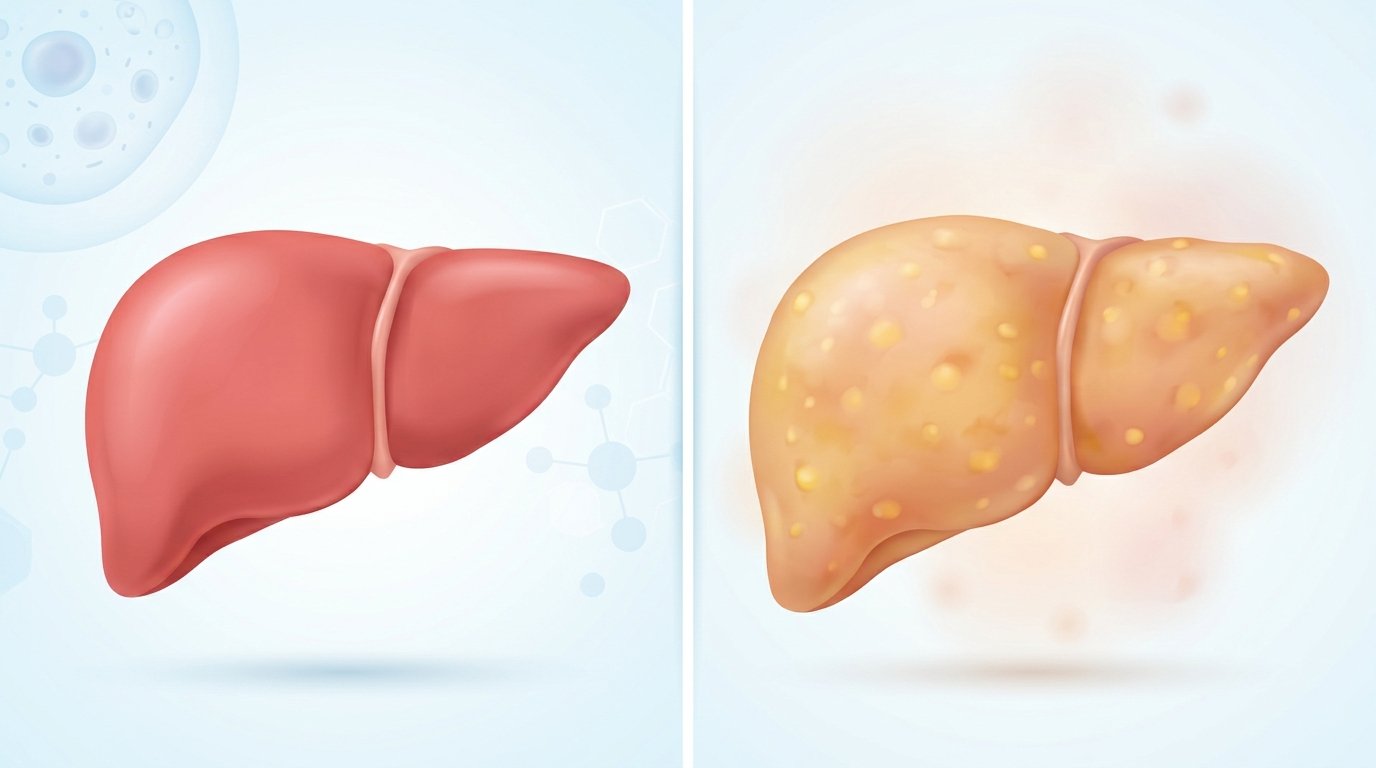
Fatty liver means excess fat has accumulated in liver cells. A small amount of fat in the liver is normal, but when fat exceeds roughly 5–10% of the liver’s weight, it is called steatosis — fatty liver. The commonest form today is linked to lifestyle: excess weight, sugary and oily foods, and inactivity (often called non-alcoholic fatty liver disease). Alcohol-related fatty liver is the other major type.
Why does it matter? A fatty liver is not just a passive storage depot — the excess fat can trigger inflammation (steatohepatitis), which over years can cause scarring (fibrosis), cirrhosis, and even liver cancer. The crucial point: the early stages are reversible, the late stages are not — which makes early action everything.
Why Fatty Liver Is Rising in Pakistan
The pattern is familiar: urbanisation, desk jobs, long commutes, sugary drinks, bakery snacks, late heavy dinners, and less physical activity than our parents’ generation. Conditions that travel with fatty liver — diabetes, high blood pressure, high cholesterol, and obesity (the “metabolic syndrome”) — are also rising. Many patients discover their fatty liver while being investigated for diabetes or during a general health check.
It is not only a disease of the overweight: slim people with poor diet quality, high sugar intake, or diabetes can develop it too. And it is appearing at younger ages than before.
Fatty Liver Grades 1–3: What They Mean
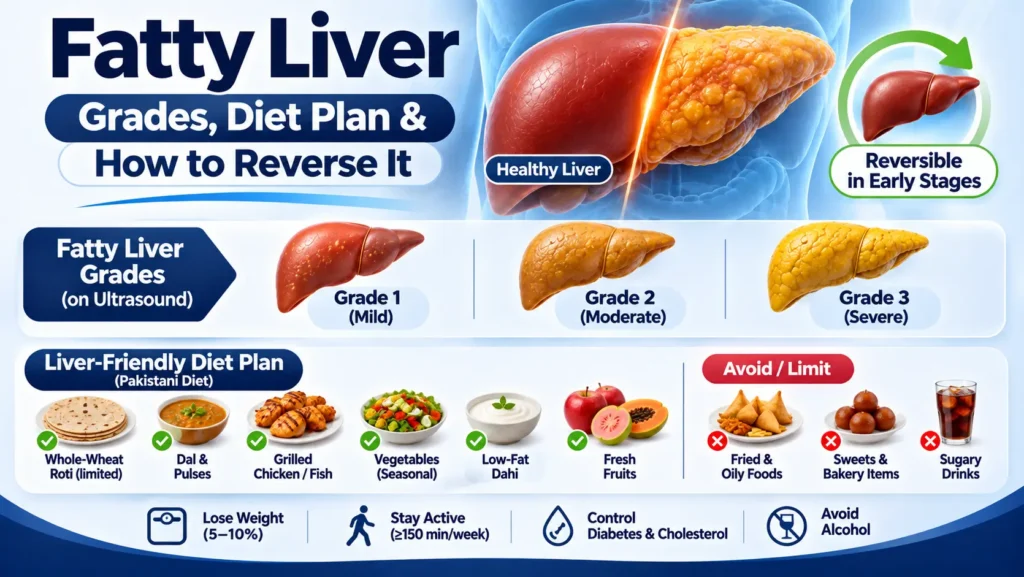
Ultrasound reports usually describe fatty liver in grades:
- Grade 1 (mild): slight fat accumulation. Often no symptoms. Highly reversible with lifestyle changes — this is the best time to act.
- Grade 2 (moderate): more marked fat; the liver may be slightly enlarged. Still reversible, but needs committed lifestyle change and medical follow-up.
- Grade 3 (severe): dense fat throughout the liver. Reversal is still possible but harder, and the risk of inflammation and scarring is higher — specialist supervision is important.
Beyond grades, doctors assess whether there is inflammation and scarring using blood tests, fibroscan (a painless scan measuring liver stiffness), and sometimes other imaging. A grade 1 liver with inflammation needs more attention than the number alone suggests — which is why the ultrasound report is a starting point, not the whole story.
Symptoms: Often Silent, Sometimes Subtle
Most people with fatty liver feel nothing. When symptoms occur, they are vague:
- Dull ache or heaviness in the upper right abdomen
- Fatigue
- General sense of sluggishness after meals
Because symptoms are unreliable, fatty liver is usually found incidentally — on ultrasound done for another reason, or during diabetes or cholesterol follow-up. If you have diabetes, obesity, or abnormal liver tests, it is worth asking your doctor specifically about your liver.
Can Fatty Liver Be Reversed? Yes — Here’s How
There is no magic tablet that melts liver fat. Reversal comes from sustained lifestyle change — and the liver responds remarkably well to it. Even a 5–10% weight loss can substantially reduce liver fat and inflammation.
1. Lose weight gradually
Aim for slow, steady loss — roughly half to one kilogram per week. Crash diets and starvation can actually worsen liver inflammation. A realistic target set with your doctor keeps you on track.
2. Follow a liver-friendly Pakistani diet
You do not need imported “superfoods.” A practical plan with local foods:
- Staples: whole-wheat atta roti (2 per meal, not 4–5), brown or plain white rice in controlled portions, oats/dalia for breakfast.
- Protein: dal, chickpeas, eggs, fish, and skinless chicken — grilled, baked, or lightly cooked, not deep-fried.
- Vegetables: generous portions of seasonal sabzi — palak, bhindi, loki, tinda, carrots. Cook with minimal oil.
- Fruits: whole fruits (guava, papaya, apples, citrus) instead of juices.
- Dairy: low-fat dahi and milk; dahi with meals is excellent.
- Fats: cut way back on ghee, banaspati, and reused frying oil. A small amount of cooking oil is fine.
- Avoid: sugary drinks (regular soda, packaged juices, excessive sweet chai), bakery items, mithai, fried snacks, and late-night heavy meals.
- Drinks: water as the main drink; green tea or plain kehwa without sugar are fine.
3. Move every day
At least 150 minutes of moderate activity per week — brisk walking counts. A 30-minute walk after dinner is one of the simplest, most effective habits. Add light resistance exercise if you can; muscle improves metabolism.
4. Control diabetes, cholesterol, and blood pressure
These conditions and fatty liver feed each other. Good control of blood sugar and lipids directly helps the liver. Take prescribed medicines regularly and follow up as advised.
5. Avoid alcohol and be careful with medicines
Alcohol adds direct injury to a fatty liver — best avoided entirely. Some medicines and many unregulated herbal products can harm the liver; discuss everything you take with your doctor.
Fatty Liver Treatment: The Medical Side
While lifestyle is the core of fatty liver treatment, medical care has important roles:
- Accurate staging: fibroscan and blood tests determine whether there is inflammation or scarring, which decides how intensive management needs to be.
- Managing associated conditions: optimising diabetes, cholesterol, and thyroid treatment.
- Medicines in selected cases: certain medicines (for example, vitamin E or diabetes medicines with liver benefits) are used in specific patients — only on specialist advice, never self-started.
- Monitoring: periodic ultrasound and liver tests track whether the fat is regressing — seeing improvement on follow-up scans is hugely motivating.
- Ruling out other causes: alcohol history, medicines, and less common liver diseases need consideration.
Beware of quack “liver detox” tonics and unproven herbal mixtures — some have caused serious liver injury. The liver detoxes itself; what it needs is less burden, not miracle bottles.
When to See a Liver Specialist
- Ultrasound shows grade 2 or 3 fatty liver
- Liver enzymes (ALT/AST) are persistently raised
- You have diabetes plus fatty liver
- There are signs of advanced disease: swelling, jaundice, easy bruising
- Family history of liver cirrhosis or liver cancer
- You are unsure whether lifestyle changes are working — follow-up scans answer this objectively
A consultation (approximately Rs. 2,000 at our clinic — please confirm when booking) can stage your liver accurately and set a clear reversal plan.
Frequently Asked Questions
How long does it take to reverse fatty liver?
With consistent lifestyle change, ultrasound improvement is often visible within 6–12 months; grade 1 changes can improve sooner. It is a marathon, not a sprint — but the liver is forgiving, and steady effort pays off. Follow-up scans with your doctor track real progress.
Can thin people get fatty liver?
Yes. While obesity is the biggest risk factor, people of normal weight can develop fatty liver from high sugar intake, diabetes, high cholesterol, or genetic tendency. “Thin outside, fat inside” is real — diet quality matters regardless of weight.
Is desi ghee bad for fatty liver?
In the quantities traditionally used — spoonfuls over every meal — yes, it contributes significant saturated fat and calories. You do not need to fear a teaspoon occasionally, but for reversing fatty liver, cutting back substantially on ghee and banaspati is one of the highest-impact changes you can make.
Do I need medicines for grade 1 fatty liver?
Usually not — grade 1 without inflammation is managed with lifestyle alone, plus control of diabetes/cholesterol if present. Medicines enter the picture for inflammation, significant scarring, or associated conditions. Your doctor will decide based on blood tests and fibroscan, not the ultrasound grade alone. See our FAQs for more on evaluations.
Your Liver Can Heal — Give It the Chance
A fatty liver diagnosis is not a life sentence — it is an early warning, and early warnings are gifts. The liver is one of the few organs that can substantially repair itself, and it asks for surprisingly little in return: sensible portions of real food, daily movement, controlled sugar, and no alcohol. With proper staging and a practical plan, fatty liver treatment succeeds for the large majority of patients who stay the course.
Book an appointment with Dr. Muhammad Raza on WhatsApp for liver assessment and a personalised reversal plan. Learn more about Dr. Raza or contact the clinic.
This article is for information only and is not a substitute for professional medical advice. Please consult a qualified doctor for diagnosis and treatment.