Medically reviewed by Dr. Muhammad Raza, Consultant Gastroenterologist & Hepatologist, Lahore.
Hepatitis C has earned its grim nickname honestly: it can damage the liver for twenty or thirty years without causing a single symptom, then surface as cirrhosis or liver cancer. Pakistan carries one of the heaviest hepatitis C burdens in the world. Yet there is extraordinary good news — modern medicines now cure hepatitis C in the vast majority of patients, often within three months. If you have never been tested, this guide explains why you should be, and what hepatitis C treatment in Pakistan looks like today.
What Is Hepatitis C?
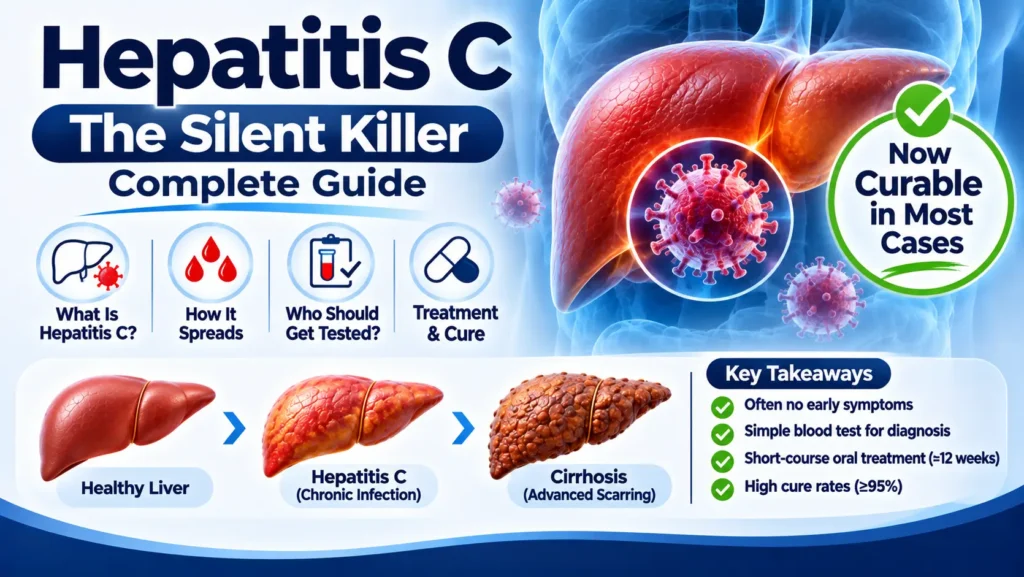
Hepatitis C is a viral infection of the liver caused by the hepatitis C virus (HCV). Unlike hepatitis B, there is no vaccine for hepatitis C — prevention relies on avoiding transmission, and control relies on finding and treating infections. After exposure, a minority of people clear the virus naturally; the majority develop chronic infection, in which the virus persists and slowly scars the liver over decades.
The “silent” nature of the disease is its greatest danger. The liver has no pain nerves and enormous reserve capacity, so significant scarring can accumulate while you feel perfectly healthy. Many patients are diagnosed only during blood donation, a routine medical, or when complications finally appear.
How Hepatitis C Spreads in Pakistan
Hepatitis C spreads through blood-to-blood contact. In our context, the main routes are:
- Reused syringes and needles — the dominant route in Pakistan. Therapeutic injections are extremely common here, and any reuse of needles or syringes can transmit the virus. Always insist on a new, sealed syringe for every injection.
- Unscreened blood transfusions — ensure all blood is properly screened.
- Unsterilised medical, dental, and barber instruments — razors, dental tools, and surgical equipment must be properly sterilised or disposable.
- Tattooing and piercing with unsterilised equipment.
- Sharing razors or toothbrushes that may carry traces of blood.
- Mother to child — possible but uncommon.
Like hepatitis B, it does not spread through food, water, hugging, coughing, or casual contact. Stigma helps no one; testing and treatment help everyone.
Symptoms: Usually None — Until Late
Chronic hepatitis C typically causes no symptoms for years. When symptoms eventually appear, they usually reflect advanced liver disease:
- Persistent fatigue
- Loss of appetite, nausea
- Upper abdominal discomfort
- Jaundice (yellowing of eyes and skin)
- Swelling of the abdomen or legs
- Easy bruising or bleeding
- Confusion or excessive sleepiness (in advanced liver failure)
Waiting for symptoms is a losing strategy — by the time they appear, the liver is often already cirrhotic. This is why screening matters: a simple blood test can detect the virus decades before damage becomes serious, when treatment is simplest and most effective.
Who Should Get Tested?
Consider testing if any of these apply:
- You have ever received injections with syringes of uncertain sterility
- You have received a blood transfusion, especially years ago
- You get shaves at barbers where blade hygiene is uncertain
- A family member has hepatitis C
- You have unexplained abnormal liver tests
- You are about to undergo surgery or are pregnant (routine screening is wise)
- You have ever donated or received blood without knowing the screening status
Testing is a two-step process: an antibody test shows exposure, and a PCR (viral load) test confirms active infection and measures the amount of virus. Both are widely available in Lahore and across Pakistan.

Hepatitis C Treatment in Pakistan: A Genuine Cure
This is where the story turns hopeful. The old treatment — interferon injections — was long, unpleasant, and only moderately effective. It has been replaced by direct-acting antivirals (DAAs): oral tablets that target the virus directly.
How modern treatment works
- Oral tablets, usually one to a few pills daily — no injections.
- Short course: typically 12 weeks (sometimes 8 or 24 depending on the case).
- Cure rates: the large majority of patients achieve a sustained cure — the virus becomes undetectable and stays undetectable.
- Well tolerated: most patients experience few side effects and continue normal life during treatment.
- Affordable generics: effective generic versions are available in Pakistan at a fraction of international prices.
What treatment cannot undo
Curing the virus stops further damage and the liver can partially recover, but established cirrhosis does not fully reverse — which is why treating before cirrhosis develops is so valuable. Patients who already have cirrhosis still benefit enormously from cure (it lowers the risk of further complications and liver cancer), but they need continued monitoring with regular ultrasound even after cure.
The treatment journey
Your liver specialist will confirm active infection, assess liver scarring (with blood tests, ultrasound, or fibroscan), check for other conditions, prescribe the appropriate antiviral course, and monitor you during and after treatment. A final viral load test after completing treatment confirms the cure. Consultation at our clinic is approximately Rs. 2,000 — please confirm current fees when booking.
Prevention: Breaking the Chain
- One syringe, one use: never accept a reused syringe — for yourself or your children. This single habit would prevent a huge share of new infections.
- Safe barbers: ask for a new blade, or bring your own.
- Sterile medical and dental care: choose providers who visibly follow sterilisation practices.
- Screened blood: only accept transfusions from reputable blood banks.
- Do not share razors, toothbrushes, or anything that may carry blood.
- Family screening: household contacts of a patient should be tested.
Living Well During and After Treatment
- Take every dose as prescribed — incomplete courses risk treatment failure.
- Avoid alcohol completely during treatment and ideally beyond.
- Tell all your doctors about the infection and the medicines you take.
- Eat normally and healthily — no extreme “liver diets” needed; beware of unproven herbal “cures” that can harm the liver.
- After cure, keep follow-up appointments — especially if you had advanced scarring.
Frequently Asked Questions
Is hepatitis C really curable?
Yes — this is one of modern medicine’s genuine triumphs. Direct-acting antivirals cure the large majority of patients with a 2–3 month course of tablets. “Cure” means the virus is undetectable in the blood and stays that way, which stops liver damage in its tracks.
How is hepatitis C different from hepatitis B?
Both attack the liver, but hepatitis C has no vaccine and is curable with a short course of tablets, while hepatitis B has an excellent vaccine but usually needs long-term suppressive treatment. They spread through similar blood-related routes. It is possible to have both, which is why testing covers both viruses.
Can hepatitis C come back after cure?
The cured virus does not return on its own, but reinfection is possible if you are exposed again through the same routes — cure does not create immunity. Continuing safe practices after cure is essential.
Should I be tested even if I feel healthy?
Yes — feeling healthy means nothing with hepatitis C, since it is silent for decades. If you have any risk factors, a simple blood test is the only way to know. Early detection means simpler treatment and a liver saved before scarring sets in. Our FAQs cover what to expect at a visit, and you can read about Dr. Raza’s liver expertise.
Silence Is Not Safety — Get Tested
Hepatitis C’s silence is what makes it deadly, but it is also what makes testing so powerful: one blood test can uncover a curable infection decades before it harms you. With short, well-tolerated, curative hepatitis C treatment in Pakistan now widely available, there has never been a better time to know your status. Do not wait for symptoms that may never come until it is late.
Book an appointment with Dr. Muhammad Raza on WhatsApp for hepatitis C testing and treatment. You can also contact the clinic directly.
This article is for information only and is not a substitute for professional medical advice. Please consult a qualified doctor for diagnosis and treatment.