Medically reviewed by Dr. Muhammad Raza, Consultant Gastroenterologist & Hepatologist, Lahore.
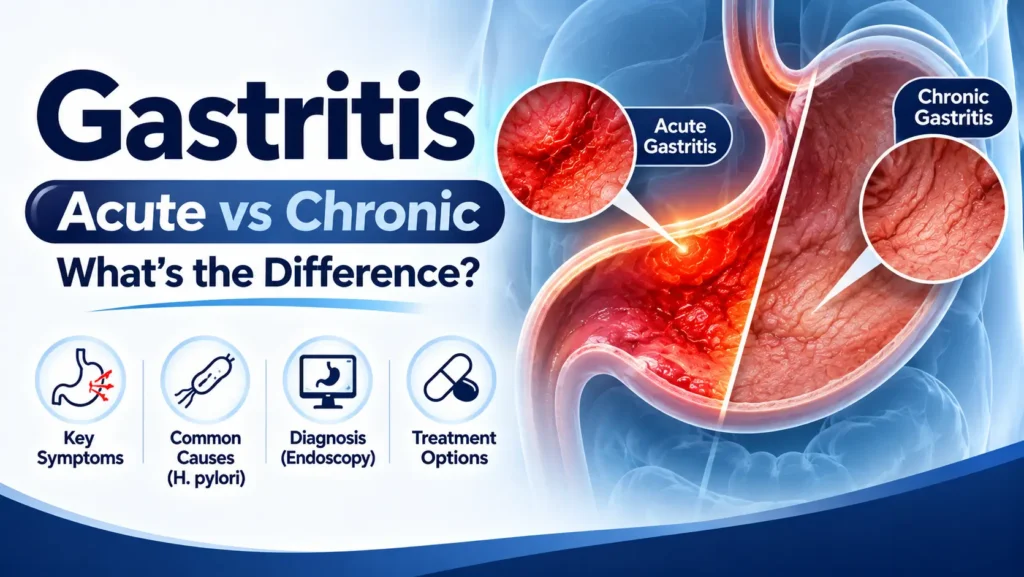
If you have ever complained of a burning stomach, sour burps, or pain after eating, someone has probably told you “it’s gastritis.” But gastritis is not one single condition — it comes in two main forms, acute and chronic, and the difference matters when it comes to gastritis treatment. Getting the right diagnosis means getting the right treatment, and that starts with understanding which type you may have.
What Is Gastritis?
Gastritis is inflammation of the stomach lining. Your stomach is lined with a protective mucus layer that shields it from the strong acid it produces to digest food. When that barrier is weakened or damaged, the acid starts irritating the lining itself — and that irritation is what we call gastritis.
It is one of the most common stomach complaints I see in my Lahore clinic. Patients often describe it as “acidity” or “tezabiyat,” but true gastritis is a specific medical finding, usually confirmed on endoscopy or by the pattern of symptoms. Knowing whether your gastritis is acute or chronic is the first step toward proper gastritis treatment.
Acute Gastritis: Sudden and Short-Lived
Acute gastritis comes on suddenly, often over hours or days. The symptoms can be intense, but the condition usually resolves within a few days to a couple of weeks once the cause is removed.
Common causes of acute gastritis
- Painkillers (NSAIDs): Medicines like ibuprofen or diclofenac, commonly taken for headaches, joint pain, or backache, are one of the top causes. Taking them on an empty stomach makes it worse.
- Alcohol: Even occasional heavy drinking, such as at a wedding or party, can acutely inflame the stomach lining.
- Spicy or very hot food: A particularly spicy degh ka salan or very hot chai can trigger a short-lived flare in a sensitive stomach.
- Stress and illness: Major surgery, serious infections, or severe physical stress can cause acute erosive gastritis.
- Food poisoning or stomach infections: Contaminated water or street food — a real concern during monsoon season — can cause sudden stomach inflammation.
Typical symptoms
Sudden upper abdominal pain or burning, nausea, vomiting, loss of appetite, and a feeling of fullness after only a few bites. Some patients notice black or dark stools if the inflammation is severe enough to cause small bleeds — that is a red flag that needs prompt evaluation.
Chronic Gastritis: Slow and Persistent
Chronic gastritis develops slowly over months or years. Many patients don’t realise they have it — they just think they have a “weak stomach” and live with daily discomfort.
Common causes of chronic gastritis
- H. pylori infection: This bacterium is extremely common in Pakistan and is the leading cause of chronic gastritis worldwide. It spreads through contaminated food and water, and many people carry it for years without knowing.
- Autoimmune gastritis: The body’s immune system attacks the stomach lining. This form is often linked with vitamin B12 deficiency and anemia.
- Bile reflux: Bile flowing back into the stomach, often after gallbladder surgery or in chronic reflux disease, can cause long-term irritation.
- Long-term NSAID use: Daily painkiller use for arthritis or chronic pain slowly damages the lining over time.
- Habitual factors: Smoking, very frequent use of paan or gutka, and a diet dominated by extremely spicy, fried foods can contribute over the years.
Typical symptoms
Dull, nagging upper abdominal discomfort, frequent sour burps, bloating after meals, early fullness, and nausea that comes and goes. Because the symptoms are milder, chronic gastritis is often ignored — but over many years, untreated chronic inflammation can increase the risk of ulcers, in a small number of cases, stomach cancer. That is why proper diagnosis matters.
Acute vs Chronic Gastritis: Key Differences
- Onset: Acute is sudden (hours to days); chronic develops gradually over months or years.
- Duration: Acute resolves quickly once treated; chronic needs long-term management.
- Severity of symptoms: Acute is often more intense; chronic is milder but persistent.
- Main causes: Acute — painkillers, alcohol, infections; chronic — H. pylori, autoimmune disease, long-term irritants.
- Diagnosis: Acute is often diagnosed by history; chronic usually needs endoscopy with biopsy to confirm.
- Treatment approach: Acute — remove the cause, short course of acid-reducing medicines; chronic — treat the underlying cause (e.g. H. pylori eradication), plus longer-term acid control.
How Gastritis Is Diagnosed
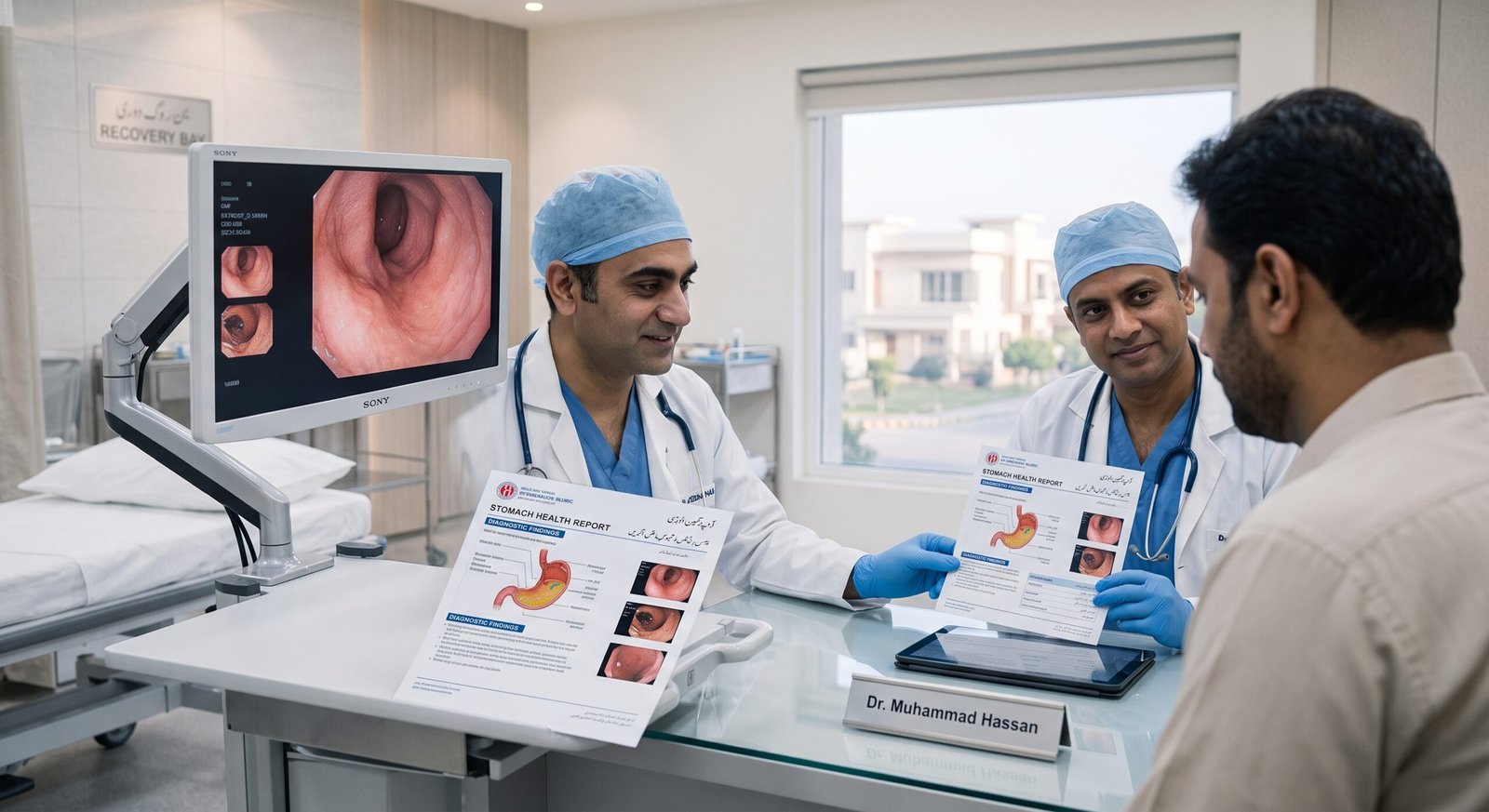
Your doctor will start with your history: what you eat, which medicines you take, and how long the symptoms have lasted. For suspected chronic gastritis, an upper endoscopy is the gold standard — a thin camera examines the stomach lining directly and small biopsies can test for H. pylori and check for precancerous changes. A simple breath test or stool test can also detect H. pylori without endoscopy in suitable patients.
Gastritis Treatment: What Actually Works
Effective gastritis treatment depends entirely on the type and cause, which is why self-medicating with antacids alone often fails.
- Acute gastritis: Stop the trigger (the painkiller, alcohol, or offending food), rest the stomach with light meals, and use acid-reducing medicines for a short course as advised by your doctor. Most patients recover fully within days.
- Chronic H. pylori gastritis: A combination of medicines to eradicate the bacterium, usually taken for one to two weeks, plus acid-reducing medicines to let the lining heal. A follow-up test confirms the infection is gone.
- Autoimmune gastritis: Managed with long-term acid control, monitoring for vitamin B12 and iron deficiency, and regular endoscopic surveillance.
- NSAID-related gastritis: Reviewing your pain medicines with your doctor, using stomach-protecting medicines if NSAIDs are unavoidable, and never taking them on an empty stomach.
Because gastritis treatment must match the cause, I strongly recommend a proper evaluation rather than months of over-the-counter antacids. If you are in Lahore, you can book a consultation for a personalised plan.
Diet and Lifestyle: The Pakistani Patient’s Guide
Diet alone rarely cures gastritis, but the right eating habits make gastritis treatment work faster and prevent flare-ups.
- Eat smaller, more frequent meals instead of two heavy ones. A big plate of biryani on an empty stomach is a classic trigger.
- Go easy on the spice and oil. You don’t have to give up desi food — just choose lighter preparations: roti with dal or mildly spiced salan instead of deep-fried or very mirch-masala dishes during a flare.
- Avoid eating late at night. Late dinners, common in Pakistani households, worsen nighttime burning. Try to finish dinner 2–3 hours before bed.
- Cut back on chai and coffee on an empty stomach. If you must have your morning chai, have it after breakfast, not before.
- Quit smoking and avoid paan/gutka — both directly damage the stomach lining.
- Stay hydrated with clean, safe water, especially in summer and monsoon when waterborne infections peak.
When to See a Doctor
See a gastroenterologist promptly if you have vomiting blood, black tarry stools, unexplained weight loss, persistent vomiting, difficulty swallowing, or stomach pain that has lasted more than two to three weeks despite simple measures. These red flags need proper evaluation — an endoscopy can quickly show what is going on inside.
Frequently Asked Questions
Can gastritis be cured permanently?
Acute gastritis usually resolves completely once the cause is removed. Chronic gastritis caused by H. pylori can be cured with proper eradication treatment. Autoimmune gastritis is a long-term condition but can be well controlled with treatment and follow-up. The key is an accurate diagnosis, which is why persistent symptoms deserve an endoscopic evaluation.
Is gastritis the same as acidity?
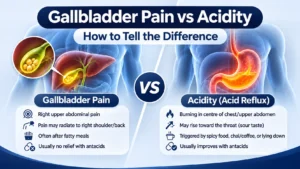
Not exactly. “Acidity” is a loose term people use for any burning sensation in the chest or stomach, which is often actually acid reflux. Gastritis specifically means inflammation of the stomach lining. The two can overlap, but their treatments differ — so it is worth getting a proper diagnosis rather than assuming.
How long does gastritis treatment take?
Acute gastritis often improves within a few days to two weeks. H. pylori-related chronic gastritis usually needs one to two weeks of combination treatment followed by several weeks of acid control, with a follow-up test to confirm the infection is cleared. Your doctor will tailor the duration to your specific situation.
What foods should I avoid with gastritis?
During a flare, avoid very spicy and fried foods, alcohol, carbonated drinks, excessive chai or coffee (especially on an empty stomach), and painkillers like ibuprofen unless your doctor advises otherwise. Stick to light, home-cooked meals — khichdi, dal, roti, yoghurt, and bananas are usually well tolerated while the stomach heals.
Dealing with ongoing stomach pain or burning? Book an appointment with Dr. Muhammad Raza on WhatsApp for proper diagnosis and effective gastritis treatment in Lahore. Consultation fee is Rs. 2,000 (in-clinic and online).
This article is for information only and is not a substitute for professional medical advice. Please consult a qualified doctor for diagnosis and treatment.