Medically reviewed by Dr. Muhammad Raza, Consultant Gastroenterologist & Hepatologist, Lahore.
Piles — known locally as bawaseer — are far more common than most people admit. The itching, pain, and bleeding can be distressing, yet embarrassment keeps many patients suffering in silence for months or years. The reassuring news is that most piles improve with simple measures, and for those that do not, modern piles treatment in Lahore offers safe, effective options with quick recovery.
What Are Piles?
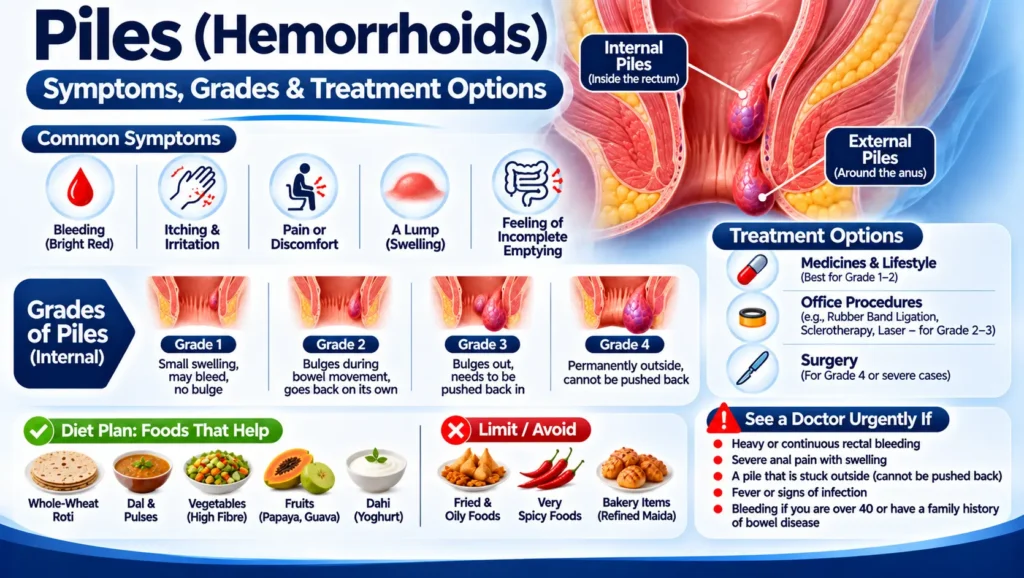
Piles (hemorrhoids) are swollen, inflamed veins in and around the anus and lower rectum — similar in concept to varicose veins. Everyone has these veins; they become a problem only when they swell, usually from increased pressure. There are two types:
- Internal piles: inside the rectum. These usually cause painless bleeding but can prolapse (bulge out) in advanced stages.
- External piles: under the skin around the anus. These can itch, hurt, and sometimes form painful blood clots.
Piles are not contagious, not caused by poor hygiene, and do not turn into cancer. But rectal bleeding should never be assumed to be “just piles” without evaluation — other conditions, including polyps, can cause similar bleeding.
Why Do Piles Develop? Common Causes in Pakistan
- Chronic constipation and straining: the number one cause. Years of straining on the toilet put direct pressure on the anal veins.
- Low-fibre diet: refined foods, bakery items, and fast food produce hard stools that require straining.
- Prolonged sitting: desk jobs, long drives, and — commonly — spending too long on the toilet with a mobile phone.
- Pregnancy and childbirth: pressure from the uterus and straining during delivery; usually improves after delivery.
- Chronic diarrhoea: repeated irritation can also trigger piles.
- Heavy lifting: labourers and gym-goers who strain without proper technique.
- Obesity and ageing: both weaken the supporting tissues over time.
The Four Grades of Piles
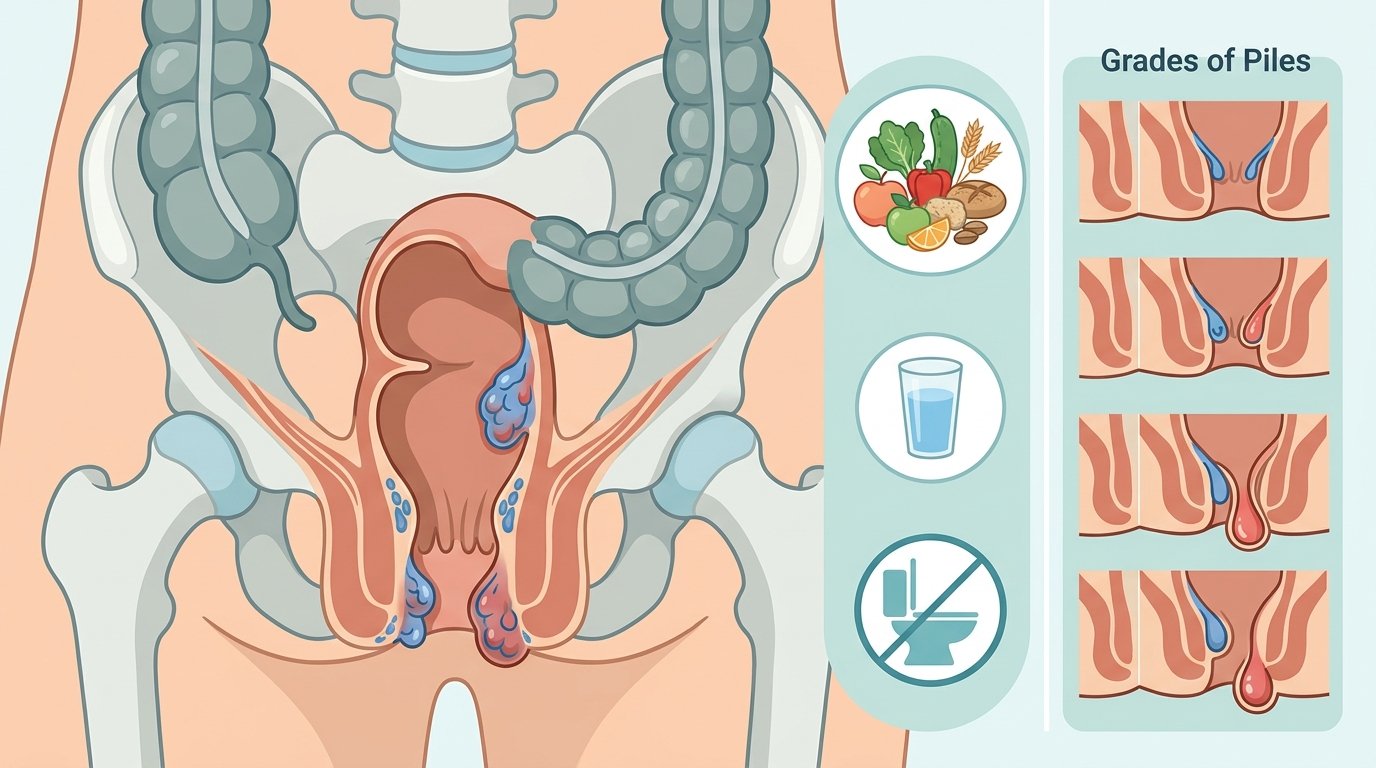
Doctors grade internal piles from 1 to 4, which determines the treatment:
- Grade 1: small swellings inside; may bleed but do not bulge out. Usually managed with diet and medicines.
- Grade 2: bulge out during bowel movements but go back inside on their own. Often treated with office procedures.
- Grade 3: bulge out and must be pushed back in manually. Usually need a procedure.
- Grade 4: permanently outside and cannot be pushed back; may be painful. Typically need surgical treatment.
Knowing the grade matters because it guides everything that follows — many patients fear surgery unnecessarily when their grade 1 or 2 piles would respond to much simpler treatment.
Symptoms: How to Recognise Piles
- Bleeding: bright red blood on toilet paper or in the bowl, usually painless and during bowel movements.
- Itching and irritation around the anus.
- Pain or discomfort, especially with external piles or clotted piles.
- A lump near the anus that may be tender.
- Mucus discharge and a feeling of incomplete emptying.
- Swelling around the anal area.
Bleeding is the symptom that worries patients most. While piles are the commonest cause of bright red rectal bleeding, any rectal bleeding deserves a medical check — particularly if you are over 40, if bleeding is persistent, or if there is a change in bowel habits. Your doctor may recommend examination and sometimes colonoscopy to be certain of the cause.
Piles Treatment in Lahore: From Home Care to Procedures
Stage 1: Lifestyle and diet (grades 1–2)
The foundation of all piles treatment in Lahore starts at home:
- High-fibre diet: whole-wheat roti, dal, vegetables, fruits like papaya and guava, and isabgol (psyllium husk) with plenty of water to keep stools soft.
- Hydration: 8–10 glasses of water daily.
- Do not strain or linger: go when you feel the urge, avoid sitting on the toilet for long periods, and leave the phone outside.
- Warm sitz baths: sitting in warm water for 10–15 minutes, two to three times a day, soothes pain and itching remarkably well.
- Exercise: daily walking improves bowel function.
- Medicines: your doctor may prescribe stool softeners, fibre supplements, or creams/ointments for short-term symptom relief.
Stage 2: Office procedures (grades 2–3)
When conservative treatment is not enough, minimally invasive procedures done in the clinic can shrink or remove piles:
- Rubber band ligation: a tiny band is placed around the pile, cutting off its blood supply so it shrivels and falls off within days. Quick, usually nearly painless, and highly effective for grade 2–3 internal piles.
- Sclerotherapy: an injection that shrinks the pile.
- Infrared or laser therapy: heat or laser energy shrinks pile tissue.
These are typically done without hospital admission, and most patients return to normal activities within a day or two.
Stage 3: Surgery (grade 4 or severe cases)
Advanced or complicated piles may need surgical removal (hemorrhoidectomy) or stapled procedures. Modern techniques have made recovery faster and less painful than the operations of the past, but surgery is reserved for cases that genuinely need it — a proper grading examination ensures you are not over-treated.
Diet Plan for Piles: Pakistani Foods That Help
- Do eat: whole-wheat atta roti, oats/dalia, all vegetables (especially leafy greens, bhindi, loki), fruits with skin where edible, papaya, figs, prunes, lentils, and plenty of dahi.
- Do drink: lots of water, lassi, fresh juices with pulp.
- Limit: very spicy foods during flare-ups (they can irritate), excessive red meat, refined maida products, and alcohol.
- Daily habit: one to two teaspoons of isabgol in warm water at bedtime, with a full glass of water.
The goal is simple: soft, regular stools that pass without straining. Achieve that, and you remove the main force driving piles.
When to See a Doctor Urgently
- Heavy or continuous rectal bleeding
- Severe anal pain with swelling (possible clotted pile)
- A pile that is stuck outside and cannot be pushed back, with severe pain
- Signs of infection: fever with anal pain and swelling
- Bleeding with dizziness, weakness, or black stools
- Any rectal bleeding if you are over 40 or have a family history of bowel disease
Frequently Asked Questions
Do piles go away on their own?
Grade 1 piles often improve with diet and lifestyle changes alone. Higher grades rarely resolve completely without treatment, though symptoms can be controlled. The earlier you address them, the simpler the treatment — grade 1 piles managed well may never progress.
Is piles surgery painful?
Modern piles procedures are far less painful than patients fear. Office procedures like banding cause minimal discomfort, and even surgical options now use techniques designed for faster, less painful recovery. Most patients say they wish they had come in sooner instead of suffering for years.
Can piles come back after treatment?
They can, if the underlying causes — constipation, straining, low-fibre diet — are not corrected. That is why every treatment plan includes long-term bowel habits, not just the procedure. With good habits, recurrence is uncommon.
How much does piles treatment cost in Lahore?
Costs vary widely depending on the grade and the treatment needed — from consultation and medicines (consultation approximately Rs. 2,000 at our clinic) to office procedures and surgery, which cost more. Please confirm current charges with the clinic when booking, as prices depend on your specific case. You can find booking details on our contact page or FAQs.
Do Not Suffer in Silence
Piles are common, treatable, and nothing to be embarrassed about — gastroenterologists see them every single day. Whether your case needs only diet changes or a quick office procedure, getting graded properly is the key step. If you are dealing with bleeding, pain, or discomfort, modern piles treatment in Lahore can resolve it far more easily than you might expect.
Book an appointment with Dr. Muhammad Raza on WhatsApp for a confidential evaluation. You can also learn more about Dr. Raza beforehand.
This article is for information only and is not a substitute for professional medical advice. Please consult a qualified doctor for diagnosis and treatment.