Medically reviewed by Dr. Muhammad Raza, Consultant Gastroenterologist & Hepatologist, Lahore.
Hepatitis B is one of the most significant liver health challenges in Pakistan. The virus quietly infects the liver, often without symptoms for years, while slowly causing damage that can lead to cirrhosis or liver cancer. Yet it is preventable by vaccine and manageable with modern medicines. Understanding hepatitis B — how it spreads, how it is detected, and what hepatitis B treatment in Pakistan involves — is something every family should take seriously.
What Is Hepatitis B?
Hepatitis B is a viral infection of the liver caused by the hepatitis B virus (HBV). “Hepatitis” simply means inflammation of the liver. The infection can be acute (short-term — most healthy adults clear it on their own) or chronic (long-term — the virus persists for more than six months). It is the chronic form that causes lasting concern: over years or decades, ongoing inflammation can scar the liver (fibrosis), progress to cirrhosis, and increase the risk of liver cancer.
Pakistan carries a considerable burden of hepatitis B — it is widely recognised as an endemic infection here, which is exactly why awareness, testing, and vaccination matter so much.
How Does Hepatitis B Spread?
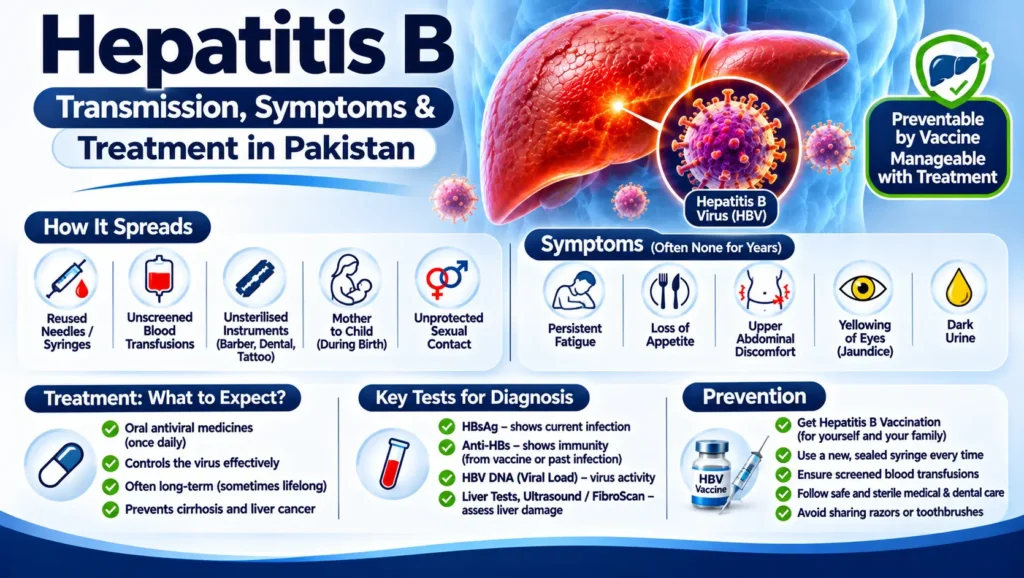
Hepatitis B spreads through contact with infected blood and certain body fluids. Common routes in Pakistan include:
- Unscreened blood transfusions — a historically major route; always ensure blood is screened.
- Reused needles and syringes — including injections from unqualified practitioners, a unfortunately common practice in some areas. Always insist on a new, sealed syringe.
- Unsterilised instruments — barbers’ razors, dental equipment, tattooing or piercing tools, and surgical instruments that are not properly sterilised.
- Mother to child — during childbirth, if the mother is infected. This is why newborn vaccination is critical.
- Unprotected sexual contact with an infected person.
- Sharing personal items like razors or toothbrushes that may carry traces of blood.
Importantly, hepatitis B does not spread through casual contact — not through sharing food, hugging, coughing, or working alongside someone. People with hepatitis B should not be stigmatised or isolated; the precautions needed are specific and simple.
Symptoms: Why It Often Goes Unnoticed
Most people with chronic hepatitis B feel completely fine for years — this is what makes it dangerous. When symptoms do appear, they may include:
- Persistent fatigue and weakness
- Loss of appetite, nausea
- Upper abdominal discomfort (right side, where the liver sits)
- Yellowing of eyes and skin (jaundice)
- Dark urine and pale stools
- Joint pains
Acute infection can cause a flu-like illness with jaundice that resolves. But chronic infection’s silence means many patients are diagnosed only when complications appear — or when a routine test, blood donation screening, or pre-employment medical unexpectedly reveals it. If you have risk factors (frequent injections, barber shaves with reused razors, family history), getting tested is a wise step even without symptoms.
Diagnosis: Simple Tests, Clear Answers
Hepatitis B is diagnosed with blood tests:
- HBsAg: shows current infection.
- Anti-HBs: shows immunity (from vaccination or past cleared infection).
- HBV DNA (viral load): measures how actively the virus is replicating.
- Liver function tests and ultrasound/fibroscan: assess how much damage the liver has sustained.
These tests are widely available in Lahore and across Pakistan at reasonable cost. Family members of a diagnosed patient should also be tested and vaccinated if not immune.
Hepatitis B Treatment in Pakistan: What to Expect
Not everyone with hepatitis B needs medicines immediately — treatment decisions depend on viral load, liver inflammation, and the degree of liver scarring. This is why specialist evaluation matters: starting treatment too early or too late both have downsides.
Who needs treatment?
Treatment is generally recommended when there is active viral replication with liver inflammation or significant fibrosis, or in special situations such as pregnancy (to prevent transmission to the baby) and before immunosuppressive therapy. Many patients with inactive infection need only regular monitoring — typically liver tests and ultrasound every 6–12 months.
What does treatment involve?
Modern hepatitis B treatment in Pakistan uses oral antiviral medicines taken once daily. These are highly effective at suppressing the virus, usually well tolerated, and allow the liver to recover. Treatment is often long-term — sometimes lifelong — because stopping too early can allow the virus to rebound. Your liver specialist will monitor your response with periodic viral load and liver tests.
What about a cure?
Current medicines suppress the virus very effectively but rarely eliminate it completely, which is why ongoing treatment and follow-up are needed. Research into curative therapies is active worldwide. In the meantime, suppressing the virus to undetectable levels dramatically reduces the risks of cirrhosis and liver cancer — which is the real goal.
A consultation at our clinic costs approximately Rs. 2,000 (in-clinic or online) — please confirm current fees when booking.
Prevention: The Vaccine Changes Everything
Hepatitis B is preventable by a safe, effective vaccine — one of the great success stories of modern medicine.
- Newborns: should receive the birth dose followed by the routine schedule — this is the single most important step for Pakistan’s future.
- Unvaccinated adults: can and should be vaccinated, especially healthcare workers, household contacts of patients, and anyone with risk factors.
- The schedule: typically three doses over six months. Protection is long-lasting.
- Safe practices: always use new syringes, ensure barbers use fresh blades, choose dental and medical care where sterilisation is assured, and ensure transfused blood is screened.
If everyone at risk were vaccinated and every patient diagnosed and monitored, hepatitis B would lose most of its power to harm. That goal is achievable — it starts with individual action.
Living with Hepatitis B: Practical Guidance
- Take medicines regularly if prescribed — missing doses lets the virus rebound.
- Avoid alcohol completely — it accelerates liver damage.
- Be cautious with medicines and herbal products — some can injure the liver; inform every doctor you see about your hepatitis B.
- Eat a balanced diet — no special “liver diet” is needed, just normal healthy Pakistani food; avoid quack “liver tonics” with unproven claims.
- Attend follow-ups — regular ultrasound and blood tests catch problems early, when they are most treatable.
- Protect others: do not share razors or toothbrushes; inform your spouse/partner so they can be tested and vaccinated; mothers should discuss prevention of transmission during pregnancy with their doctor.
Frequently Asked Questions
Can hepatitis B be cured?
Current medicines suppress the virus to undetectable levels but rarely eliminate it entirely, so most patients stay on long-term treatment with regular monitoring. Suppression is highly effective at preventing cirrhosis and liver cancer. A small number of patients achieve full clearance over time, and research toward a true cure continues.
Should my whole family be tested if I have hepatitis B?
Yes. Household and sexual contacts should be tested for infection and immunity, and vaccinated if not immune. This is standard medical advice and one of the most effective ways to stop the virus spreading within families. Children born to infected mothers need special attention at birth.
Is the hepatitis B vaccine safe?
Yes — it is one of the safest and most widely used vaccines in the world, given to hundreds of millions of people including newborns. Side effects are usually limited to mild soreness at the injection site. Its benefits in preventing chronic liver disease and liver cancer vastly outweigh any minimal risk.
Can I live a normal life with hepatitis B?
Absolutely. With proper treatment and monitoring, most patients live full, normal lives — working, marrying, and raising families. You can share meals, hug your children, and work alongside others without risk to them. The key is regular follow-up with your liver specialist; see our FAQs for more on clinic visits. Learn more about Dr. Raza’s liver expertise.
Act Early, Stay Protected
Hepatitis B rewards early action and punishes delay. A simple blood test tells you where you stand; a vaccine protects you for life; and modern hepatitis B treatment in Pakistan keeps the virus suppressed and the liver safe for the vast majority of patients. If you have risk factors, an infected family member, or simply have never been tested or vaccinated, take that step soon — your liver will thank you for decades.
Book an appointment with Dr. Muhammad Raza on WhatsApp for hepatitis B testing, vaccination advice, or treatment. You can also contact the clinic directly.
This article is for information only and is not a substitute for professional medical advice. Please consult a qualified doctor for diagnosis and treatment.